
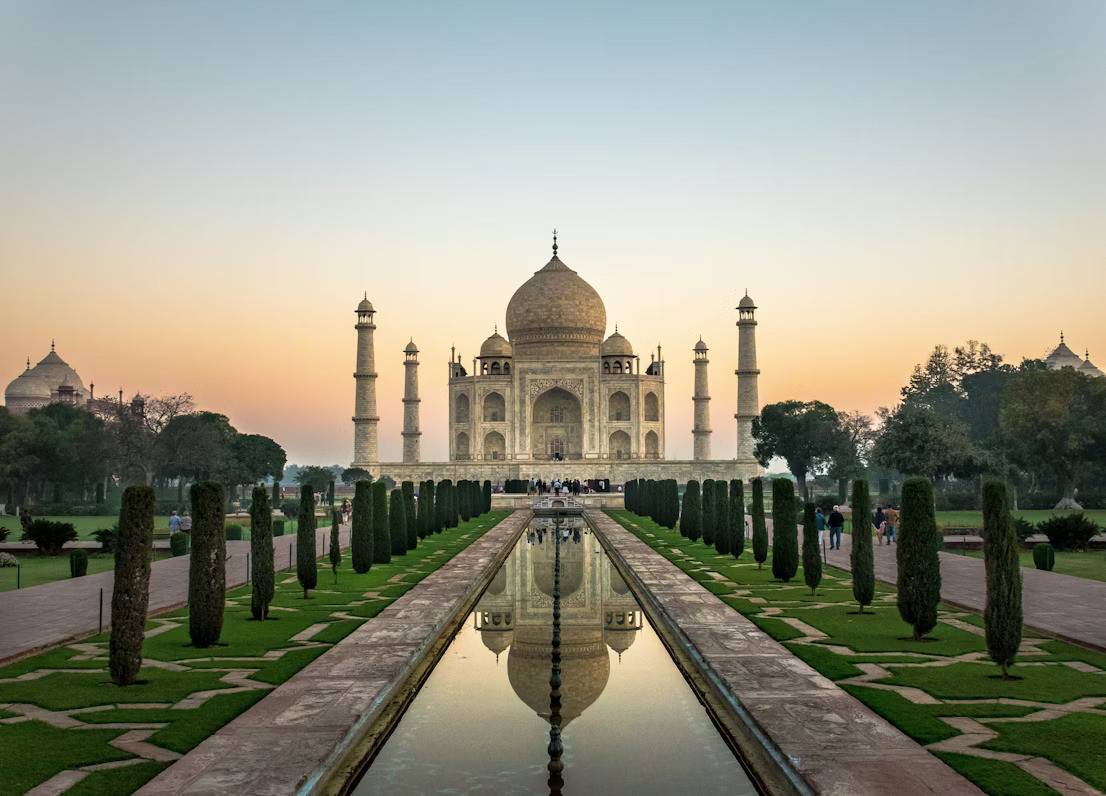
I have always believed that India is the most underrated travel destination on the planet. Nowhere else on Earth can you stand at the foot of a Himalayan glacier in the morning and by evening watch the sun melt into the Arabian Sea. Nowhere else do you find 22 officially recognized languages, over 6,400 distinct castes, and 7 major religions not just coexisting — but actively shaping each other’s food, music, and festivals.
Yet, despite all this, India received only about 9.2 million foreign tourist arrivals in 2023. Compare that to France — the world’s top destination — which welcomed over 100 million visitors the same year. That gap is not because India has less to offer. It is because India has not yet figured out how to tell its story well, or build the infrastructure to back it up.
In this article, I am going to break down exactly what needs to happen — policy, infrastructure, marketing, culture, and sustainability — for India to genuinely become a global tourism powerhouse. I will share hard numbers, real problems, and honest solutions. No fluff. Just what actually works.
Le Patrimoine — Understanding India’s Tourism Potential
India’s tourism sector contributed approximately 5.8% to the national GDP in 2023, employing nearly 32 million people directly and indirectly. The Ministry of Tourism projects this number to double by 2030 if the right investments are made. That is not a small bet. That is a national economic strategy.
The word “tourism” itself comes from the Old French word tour, meaning a journey or a circular trip. And India, perhaps more than any country, rewards circular journeys. You cannot see India in one visit. Most serious travelers come back three, four, five times and still find regions they have never touched.
India has 42 UNESCO World Heritage Sites — the sixth highest in the world. It has 18 biogeographic zones, meaning its biodiversity rivals that of entire continents. It has coastlines stretching over 7,500 kilometers, from the fishing villages of Tamil Nadu to the Portuguese-influenced beaches of Goa. The raw material is extraordinary. What is missing is the machinery to process and present it.
The government’s “Incredible India” campaign, launched in 2002, was a step in the right direction. But a slogan is not a strategy. Real tourism success requires connecting the dots between airport quality, road infrastructure, hotel availability, digital booking systems, visa policy, and the behavior of every single person a tourist interacts with.
Infrastructure: The Foundation That Cannot Be Ignored
Let me be direct: bad infrastructure kills tourism. A traveler who spends six hours on a potholed road to reach a temple, only to find no clean toilet nearby, will not come back. And they will tell ten friends not to go either.
India has made measurable progress here. As of 2024, India operates 148 functional airports, up from just 74 in 2014. The government’s UDAN scheme — Ude Desh ka Aam Naagrik — has connected 58 previously unserved cities with affordable air routes. This matters enormously for tourism because many of India’s most spectacular destinations — Aizawl, Pasighat, Deoghar — were previously accessible only by grueling road journeys.
But airports are just entry points. The real challenge is what happens after landing. Railway connectivity to major tourist circuits needs serious upgrading. The Vande Bharat Express trains have been a visible win, but the frequency and coverage are still insufficient for tourist-heavy routes like Varanasi–Agra or Kochi–Munnar.
Road quality in heritage zones remains inconsistent. I have driven to Hampi, one of the most jaw-dropping UNESCO sites in India, on roads that would embarrass a rural bypass. Hampi gets fewer than 500,000 visitors annually. Machu Picchu, with arguably less visual drama, attracts over 1.5 million. The difference is largely the journey experience.
Sanitation — les toilettes — remains perhaps the most pressing issue. The Swachh Bharat Mission improved rural sanitation drastically, but tourist zones still suffer from inconsistent maintenance. A clean public restroom should be considered tourism infrastructure, not a luxury.
Digital Presence and Online Marketing: Telling the Story Right
Tourism in the modern era is won or lost online. A traveler planning a trip to Rajasthan does not call a travel agent. They open Instagram, YouTube, and Google. If India does not dominate those spaces with compelling, accurate, and beautiful content — it loses.
The “Incredible India” digital campaign has improved significantly since 2019. The official website now features virtual tours, itinerary planners, and regional guides. But the content volume is still thin compared to what Thailand, Japan, or even Peru produces.
I think India’s greatest untapped marketing resource is its own diaspora. Over 32 million people of Indian origin live across the world. These are natural brand ambassadors — people who carry emotional connections to the country and have real social media followings in their local markets. A well-structured influencer program targeting NRI content creators could generate millions of organic impressions at a fraction of the cost of paid advertising.
The government’s e-Tourist Visa (e-TV) facility, available to citizens of 167 countries, is a genuine success story. Processing times have dropped to under 72 hours. But awareness of this facility remains low. Many potential visitors still believe India requires weeks of consular paperwork. That perception gap needs aggressive correction in target markets — particularly the United States, Germany, Australia, and the Gulf countries.
Search engine optimization for tourism-related keywords must become a government-funded priority. When someone in London types “best places to visit in South Asia,” India should appear first. Right now, it often does not.
Le Tourisme Culturel — Selling Culture Without Commodifying It
India’s culture is its greatest product. But culture is fragile. When tourism scales too fast without sensitivity, it damages the very thing it was supposed to showcase.
Cultural tourism — le tourisme culturel — is defined as travel undertaken primarily to experience the arts, heritage, and character of a destination. India’s festivals alone could sustain an entire tourism economy. Pushkar Camel Fair, Hornbill Festival, Thrissur Pooram, Rann Utsav — these are not just events; they are immersive experiences that cannot be replicated anywhere else on Earth.
The Rann of Kutch festival in Gujarat grew from a modest local celebration to attracting over 800,000 visitors in a single season. That happened because the Gujarat government invested in tent city infrastructure, transport links, and active digital promotion three years in a row. The lesson is clear: sustained, focused investment in cultural events creates exponential tourism growth.
But there is a flip side. Varanasi’s ghats, for instance, are simultaneously one of India’s most compelling attractions and one of its most over-commercialized. Aggressive touts, polluted riverfront areas, and chaotic boat management undermine the spiritual gravitas that draws visitors in the first place. Authentic cultural tourism requires regulation — not to sanitize the experience, but to protect it.
Heritage villages, craft clusters, and classical performing arts communities need tourism integration that puts local communities in charge. When the money stays local and the narrative is controlled by the people who actually live it, the tourism product becomes more genuine — and therefore more sellable.
Sustainable Tourism: Le Développement Durable in Practice
Here is something the tourism industry often pretends not to know: mass tourism, without management, destroys itself. I have seen it happen. Overcrowded beaches in Goa. Plastic waste choking the base camps of Kedarnath. Tiger reserves where the noise of safari jeeps disturbs breeding seasons.
Sustainable tourism — le développement durable du tourisme — means designing visitor experiences in a way that preserves the ecological and cultural assets that make a place worth visiting. India’s biodiversity is extraordinary: 7.6% of all global mammal species, 12.6% of bird species, and 6.2% of reptile species call this country home. That is an unmatched ecotourism asset — but only if it is protected.
Community-based tourism models have shown real promise. In Nagaland, the Hornbill Festival has been rebuilt as a community-owned event, with local tribes controlling performances, accommodating visitors, and setting prices. Revenue stays in the villages. Identity stays intact. This is the model India should scale.
The concept of carrying capacity — how many visitors a site can absorb without degradation — needs to become central to India’s tourism policy. Leh-Ladakh, for instance, saw tourist arrivals spike to nearly 600,000 in 2023, straining its fragile high-altitude ecosystem and water resources. Seasonal caps, tourist permits, and green fees are not anti-tourism measures. They are pro-tourism measures that extend a destination’s viability.
Eco-certified homestays, solar-powered resorts in sensitive areas, and plastic-free heritage zones should receive government subsidies and active promotion. The traveler of 2025 is increasingly choosing destinations based on environmental ethics. India can compete on those terms — but only if it acts now.
Hospitality Training: People Are the Product
Every tourism expert I respect agrees on this: the single biggest differentiator in any destination’s success is the quality of human interaction a visitor has. Infrastructure can be built in years. Trust takes generations.
India’s hospitality tradition — Atithi Devo Bhava, which translates to “the guest is equivalent to God” — is one of the most beautiful cultural philosophies in the world. It is also one of the most inconsistently practiced.
The Ministry of Tourism runs the Hunar Se Rozgar scheme, which trains youth in hospitality and tourism-related skills. Over 1.5 million people have been trained under this program since its inception. Good numbers. But the training quality varies wildly across states, and follow-through in terms of actual employment placement is weak.
What India needs is a nationally standardized hospitality certification system — something equivalent to France’s CAP Tourisme or Thailand’s ASEAN Tourism Standards. Hotels, guides, taxi drivers, and guesthouse owners who meet verified standards should receive a recognizable quality mark that tourists can search for and trust.
Local tour guides are perhaps the most powerful tourism asset a country has. A knowledgeable, passionate guide can make a mediocre monument unforgettable. A bored, misinforming guide can make a UNESCO masterpiece feel dull. India’s guide licensing system needs reform — stricter testing, better pay structures, and integration with digital platforms so independent travelers can easily book certified guides.
Medical and Wellness Tourism: India’s Fastest-Growing Vertical
This is the one area where India is already winning — and needs to double down. India’s medical tourism sector was valued at approximately USD 9 billion in 2023 and is projected to reach USD 14 billion by 2026. That growth is driven by one simple equation: world-class procedures at a fraction of Western prices.
A hip replacement that costs USD 40,000 in the United States costs approximately USD 7,000 in India — with comparable outcomes at accredited hospitals. Cardiac surgeries, fertility treatments, cancer care, dental work — India’s hospitals in Chennai, Mumbai, Delhi, and Hyderabad consistently rank among Asia’s best.
But medical tourism cannot exist in isolation. Patients travel with families. Recovery takes weeks. India needs dedicated medical tourism corridors with comfortable recovery accommodation, dedicated visa processing, airport assistance, and curated light sightseeing options for accompanying family members.
Wellness tourism — le tourisme de bien-être — is another fast-growing vertical. Yoga, Ayurveda, and traditional healing systems like Siddha and Naturopathy are uniquely Indian exports. Kerala’s Ayurveda resorts have built a global reputation, drawing visitors from Germany, France, and Russia specifically for panchakarma treatments and stress recovery programs. This sector needs structured government support in terms of certification, quality standards, and international marketing.
Conclusion: The Opportunity Is Real — So Is the Urgency
I started this article with a simple observation: India has everything needed to be the world’s greatest tourism destination. And I genuinely believe that. But belief is not enough.
What India needs now is execution. Consistent infrastructure investment. Aggressive, data-driven digital marketing. Sustainable tourism frameworks that protect what makes the country extraordinary. Hospitality training that turns Atithi Devo Bhava from a slogan into a daily practice. And visa and policy frameworks that roll out the welcome mat rather than making people fight for entry.
The economic argument is overwhelming. Tourism is one of the few industries that can simultaneously boost GDP, generate employment at every skill level, support conservation, and build soft power abroad. India’s 2030 tourism targets — 30 million foreign arrivals and USD 56 billion in revenue — are achievable. But they require treating tourism not as a nice-to-have ministry, but as a core national priority.
The world is watching. More importantly, the world is booking. India needs to be on that itinerary — not as an afterthought, but as the destination.
Frequently Asked Questions (FAQs)
1. What is the best time to visit India for tourism? India’s ideal travel window is October to March, when temperatures across most of the country are comfortable and festivals like Diwali, Pushkar Mela, and Christmas in Goa add cultural richness to the visit. Hill stations and northeastern states are best visited between April and June.
2. How can India promote tourism internationally? India can promote international tourism through aggressive digital marketing in key source markets, influencer campaigns targeting the Indian diaspora, participation in global travel expos, simplified e-visa processes, and strong partnerships with international airlines and online travel agencies.
3. Which are the most popular tourist destinations in India? The Golden Triangle — Delhi, Agra, and Jaipur — remains India’s most visited circuit. Kerala’s backwaters, Goa’s beaches, Rajasthan’s palaces, Ladakh’s high-altitude landscapes, and Varanasi’s ghats are consistently among the top-ranked experiences for international travelers.
4. What is medical tourism in India and why is it growing? Medical tourism in India refers to international patients traveling to India specifically for healthcare procedures. It is growing because India offers treatments at 60–80% lower cost than Western countries, with internationally accredited hospitals and experienced specialists, particularly in cardiac surgery, orthopedics, and fertility treatment.
5. How can sustainable tourism be developed in India? Sustainable tourism in India can be developed by implementing carrying capacity limits at sensitive sites, promoting community-owned tourism enterprises, certifying eco-friendly accommodations, integrating green infrastructure into heritage zones, and building local economic models where tourism revenue directly supports conservation and community welfare.