
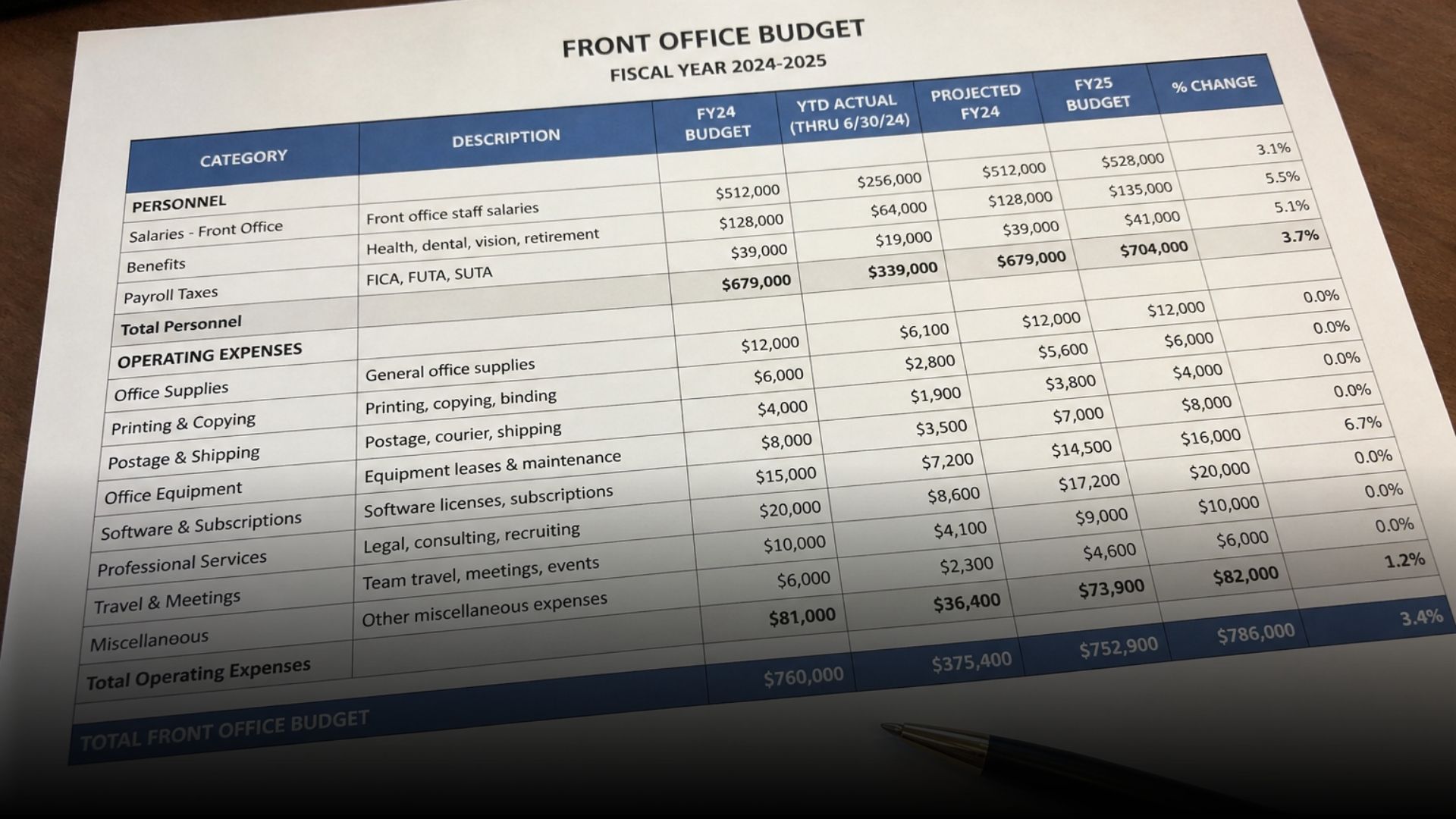
When I first stepped into front office operations, I thought budgeting was just about numbers on a spreadsheet. I was wrong. Budgeting in the front office is more like managing a living system. It moves. It reacts. It needs constant attention.
The front office, often called the réception in French hospitality terms, acts as the financial heartbeat of any hotel or service-based property. Every booking, every check-in, every guest interaction eventually connects to revenue. That is why refining a budget plan here is not optional. It is essential.
A refined budget plan helps me forecast revenue, control expenses, and make smarter decisions. According to industry data, hotels that actively review and refine their budgets monthly improve profitability by up to 15%. That is a serious number.
In this article, I will walk through how I refine a budget plan in front office operations. Not in theory. But in real, practical steps that I use. Step by step. Clear and simple.
Understanding the Concept of Budget Refinement in Front Office
Before I refine anything, I need to understand what I am refining.
A budget plan in front office operations is a financial blueprint. It estimates expected revenue (revenu prévisionnel) and expenses over a specific period. Refinement means adjusting that plan based on real-time performance, market changes, and operational realities.
The concept of budgeting dates back to the early 18th century, derived from the French word bougette, meaning a small bag used to carry money. Over time, it evolved into a formal financial planning tool.
In front office operations, budget refinement focuses on key areas:
- Room revenue
- Occupancy rates
- Average Daily Rate (ADR)
- Revenue per Available Room (RevPAR)
For example, if my projected occupancy was 75% but actual performance drops to 60%, I cannot ignore it. I refine the plan. I adjust projections. I rethink pricing strategies.
This process is not static. It is continuous. Daily, weekly, monthly.
Analyzing Historical Data to Build a Strong Base
I never start refining a budget blindly. I always look back before I move forward.
Historical data gives me patterns. It shows me trends. It reveals mistakes I made earlier. Most hotels rely heavily on past performance because it is the most reliable indicator of future behavior.
I analyze:
- Last year’s occupancy rates
- Seasonal trends
- Guest booking patterns
- Revenue fluctuations
For instance, if I notice that occupancy spikes by 30% during festive seasons, I factor that into my refined budget. Ignoring such patterns would mean underestimating revenue.
Statistics show that properties using historical data effectively improve forecasting accuracy by up to 20%.
I also compare budget vs actual performance. This gap analysis helps me identify where the original plan failed. Was it overestimation? Poor pricing? External factors?
Every number tells a story. I just have to read it carefully.
Evaluating Key Performance Indicators (KPIs)
Numbers without context are useless. That is why I rely on KPIs.
In front office budgeting, KPIs are my compass. They guide my decisions.
The most important KPIs I focus on include:
- ADR (tarif journalier moyen)
- RevPAR
- Occupancy percentage
- Guest retention rate
Let me give you a simple example. If my ADR is high but occupancy is low, it signals a pricing issue. I may need to adjust rates to attract more bookings.
On the other hand, if occupancy is high but revenue is low, I might be underpricing rooms.
Industry benchmarks suggest that a healthy hotel should maintain an occupancy rate between 65% to 75% depending on the market.
By evaluating KPIs regularly, I refine my budget with precision. Not guesswork.
Adjusting Revenue Forecasts Based on Market Trends
Markets change. Fast.
If I stick to an outdated budget, I lose money. Simple as that.
I constantly monitor:
- Local events
- Tourism trends
- Competitor pricing
- Economic conditions
For example, if a major event is announced nearby, I immediately revise my revenue forecast. Demand will rise. Prices can increase.
On the flip side, during low-demand periods, I adjust expectations and focus on promotional strategies.
Research shows that dynamic pricing strategies can increase hotel revenue by up to 10%.
I treat my budget as flexible. Not fixed. That mindset makes all the difference.
Controlling Operational Costs Without Affecting Service Quality
Revenue is only half the story. Costs matter just as much.
In front office operations, expenses include:
- Staff salaries
- Training costs
- Technology systems
- Guest service amenities
Refining a budget means identifying unnecessary costs without damaging guest experience.
For example, instead of cutting staff, I optimize scheduling. I align shifts with peak hours. This improves efficiency without affecting service.
I also invest in automation tools. Self check-in systems reduce workload and long-term costs.
Studies show that hotels implementing cost-control strategies effectively can reduce operational expenses by 8% to 12%.
Cost control is not about cutting corners. It is about smart allocation.
Integrating Technology for Smarter Budget Refinement
Technology has completely changed how I manage budgets.
Modern front office systems, often referred to as systèmes de gestion hôtelière, provide real-time data. That is powerful.
I use:
- Property Management Systems (PMS)
- Revenue management software
- Data analytics tools
These tools help me track performance instantly. No delays. No manual errors.
For example, a PMS can show live occupancy rates. If bookings drop suddenly, I can react immediately.
Hotels using advanced revenue management systems report up to 20% higher profitability.
Technology does not replace human judgment. But it makes it sharper.
Collaborating with Other Departments for Accurate Planning
Front office does not operate alone.
To refine a budget properly, I collaborate with:
- Housekeeping
- Sales and marketing
- Food and beverage
Each department impacts the budget.
For instance, if marketing plans a new campaign, I adjust revenue forecasts accordingly. More visibility often means more bookings.
Similarly, housekeeping costs affect operational expenses. If occupancy increases, cleaning costs rise.
This collaborative approach ensures that my budget reflects reality. Not assumptions.
Monitoring and Reviewing Budget Regularly
A budget is not something I create and forget.
I review it regularly. Weekly, sometimes daily.
I compare:
- Actual revenue vs projected revenue
- Actual expenses vs planned expenses
If there is a deviation, I act immediately.
According to financial management studies, businesses that review budgets frequently are 30% more likely to meet financial goals.
Consistency is key. Small adjustments made regularly prevent big problems later.
Implementing Flexible Pricing Strategies
Rigid pricing does not work anymore.
I use flexible pricing, also known as tarification dynamique.
Room rates change based on:
- Demand
- Season
- Booking patterns
For example, during high demand, I increase rates. During low demand, I offer discounts or packages.
This strategy maximizes revenue.
Data shows that dynamic pricing can improve RevPAR significantly compared to fixed pricing models.
Flexibility keeps my budget realistic and profitable.
Training Staff to Support Budget Goals
People play a huge role in budget refinement.
I make sure my team understands financial goals. Even front desk staff.
When employees know the importance of upselling rooms or promoting services, revenue increases naturally.
Training includes:
- Upselling techniques
- Guest engagement strategies
- Operational efficiency
A well-trained team can increase front office revenue by up to 15%.
Budget refinement is not just numbers. It is people-driven.
Conclusion
Refining a budget plan in front office operations is not a one-time task. It is an ongoing process. It requires attention, analysis, and adaptability.
I focus on data. I monitor KPIs. I adjust based on real conditions. I control costs without sacrificing service. And most importantly, I stay flexible.
The front office is where revenue begins. If I refine my budget properly here, the entire operation benefits.
Over time, I have learned that a refined budget is not just about accuracy. It is about control. It gives me clarity. It helps me make better decisions. And it keeps the business moving forward.
FAQs
1. What is a front office budget plan in hotels?
A front office budget plan is a financial estimate of expected revenue and expenses related to reception operations, including room sales and guest services.
2. How often should I refine a budget plan in front office operations?
I recommend reviewing and refining the budget weekly or monthly to ensure accuracy and adaptability to market changes.
3. What are the most important KPIs for front office budgeting?
Key KPIs include ADR, RevPAR, occupancy rate, and guest retention rate.
4. How does dynamic pricing help in budget refinement?
Dynamic pricing adjusts room rates based on demand, helping maximize revenue and improve financial forecasting.
5. Why is historical data important in refining a budget plan?
Historical data provides trends and patterns that improve forecasting accuracy and reduce financial risks.