
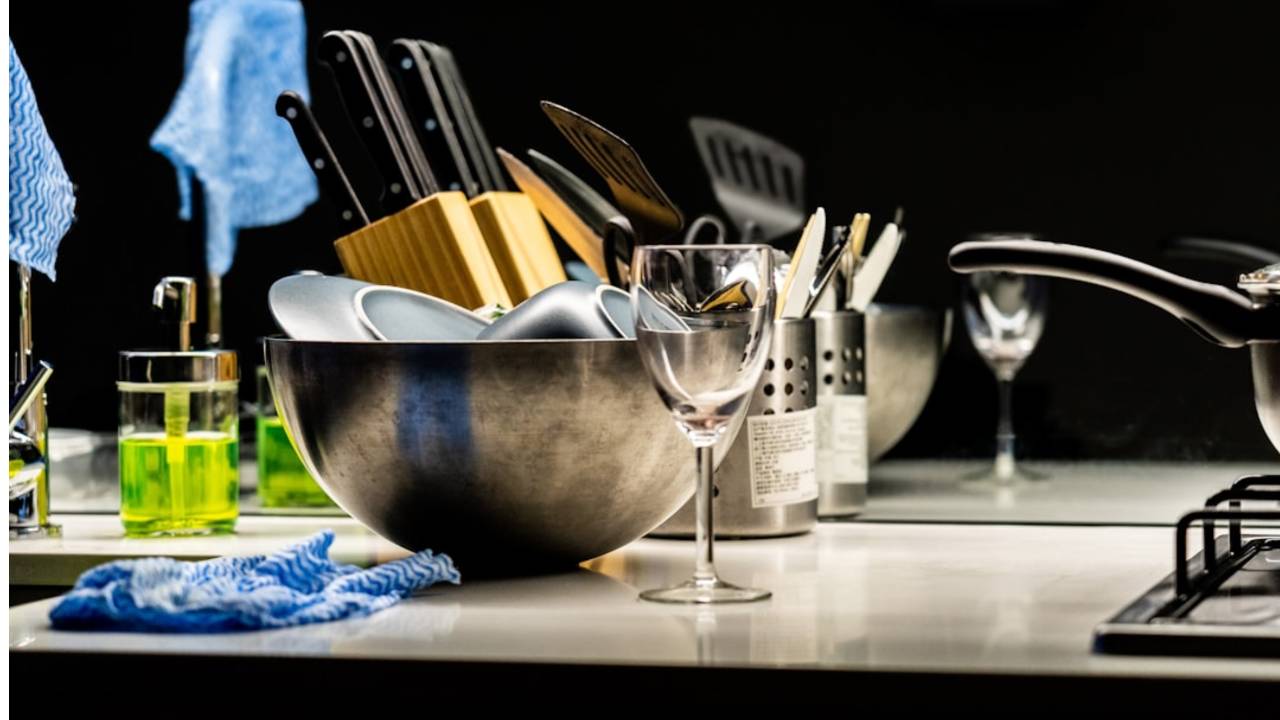
Walk into any professional kitchen — a Parisian brasserie, a New York steakhouse, a Tokyo ramen shop — and you will notice one thing immediately. The tools. Everywhere. Hanging, stored, lined up with military precision. There is a reason chefs obsess over their equipment. The right tool does not just make cooking easier. It changes the outcome entirely.
Home cooks often underestimate this. They grab whatever pan is closest. They skip the thermometer. They blend with a fork. And then they wonder why their food does not taste like the restaurant version.
I have spent years in kitchens — professional and personal — and the single biggest upgrade most people can make is understanding their tools. Not just owning them. Understanding them. Knowing why a carbon steel pan behaves differently from a non-stick. Knowing when to reach for a probe thermometer versus an infrared one. Knowing that a convection oven and a conventional oven are not interchangeable.
This guide breaks down seven essential kitchen categories. Pans, whisks, thermometers, blenders, ovens, steam cookers, and broilers. I will cover what each one is, where it came from, the types available, and how to actually use them well. By the end, you will look at your kitchen differently.
Pans — La Poêle: The Foundation of Every Kitchen
The word “pan” traces back to Old English panne, itself borrowed from Latin patina, meaning a shallow dish. Romans were cooking in pans two thousand years ago. That tells you something about how fundamental this tool really is.
A pan is any flat-bottomed cooking vessel designed for stovetop use. Simple definition. But the variety hiding inside that definition is enormous.
Cast Iron (Fonte) is the grandfather of all pans. It retains heat better than almost any other material — once hot, it stays hot. That makes it perfect for searing steaks, frying chicken, and baking cornbread. A well-seasoned cast iron pan is naturally non-stick and can last generations. The downside? It is heavy. It reacts with acidic foods. And it takes time to heat evenly. But once you learn it, you will reach for it constantly.
Stainless Steel is what professional kitchens run on. It is durable, non-reactive, and handles high heat without complaint. It does not have the non-stick surface beginners expect, so food sticks if you do not use enough fat and manage heat properly. That sticking, by the way, creates the fond — those brown bits — which becomes the base of your sauces. Stainless steel rewards skill.
Non-Stick (Anti-Adhésif) is the beginner’s best friend. Coated with PTFE (commonly known as Teflon) or ceramic, these pans require minimal fat and release food easily. They are ideal for eggs, pancakes, and delicate fish. But they have limits. High heat degrades the coating. Metal utensils scratch it. Most non-stick pans need replacement every two to three years.
Carbon Steel sits between cast iron and stainless steel. It is lighter than cast iron but develops the same seasoning over time. Professional crepe pans and woks are almost always carbon steel. It heats fast, responds quickly to temperature changes, and once seasoned, becomes nearly non-stick naturally.
Copper (Cuivre) is the choice of serious pastry chefs. Copper conducts heat more efficiently than any other cooking metal — about five times better than cast iron. It heats evenly and cools quickly, giving you incredible control. The catch is cost and maintenance. A quality copper pan can run hundreds of dollars and requires regular polishing.
Pan size matters too. A 10-inch pan is a home kitchen workhorse. A 12-inch handles larger batches. A smaller 8-inch is perfect for single eggs or sautéed garlic.
Whisks — Le Fouet: The Tool That Moves Air
The whisk, known in French as le fouet (literally “the whip”), has a history stretching back to at least the 18th century in French cooking. Early whisks were bundles of twigs or straw. By the mid-1800s, the wire loop design we recognize today had emerged in French professional kitchens.
A whisk does one primary job — it incorporates air and blends ingredients by moving rapidly through them. But that one job produces a wide range of results depending on the type of whisk you use.
Balloon Whisk (Fouet Ballon) is the round, bulbous whisk you picture immediately. The wide shape traps air efficiently. This is your whisk for whipping cream, beating egg whites, and making meringue. When you need volume — when you need something to double in size and become light and airy — the balloon whisk delivers. Professional pastry chefs swear by it.
French Whisk (Fouet Français) is narrower and longer than the balloon whisk. It fits into pots and bowls with a smaller base. You will use this for making sauces, gravies, and vinaigrettes. The narrow shape gives you better control and lets you reach into corners of a saucepan easily.
Flat Whisk (Fouet Plat) looks almost like a flattened coil. It is designed for wide, shallow surfaces — roasting pans, skillets, sheet pans. Making pan gravy? This is the tool. It picks up fond from the bottom of a pan without splashing.
Coil Whisk has a spring-like structure instead of loops. It is excellent for mixing in narrow spaces — inside a mug, a jar, or a tall narrow glass. Great for hot chocolate or single-serve drinks.
Ball Whisk has individual wires tipped with small metal balls instead of loops. It is gentler and works well with thin batters or delicate sauces where you want blending without excessive aeration.
Wire gauge matters. Thinner wires flex more and incorporate air better — ideal for whipping. Thicker wires are stiffer and better for heavy batters or thick sauces.
Thermometers — Le Thermomètre: The Tool Most Home Cooks Ignore
Here is an honest truth. Most cooking failures come from temperature guessing. That steak that turned out gray and overcooked? Temperature guessing. That chicken that needed another fifteen minutes? Temperature guessing. A thermometer removes the guesswork entirely.
The culinary thermometer has roots in the scientific instruments of the 17th century. Gabriel Fahrenheit created the mercury thermometer in 1714. By the 20th century, purpose-built food thermometers had become standard in commercial kitchens.
Instant-Read Digital Thermometer is the most versatile thermometer for home cooks. Insert it into the thickest part of a protein and within two to three seconds you have an accurate reading. The USDA recommends cooking poultry to 165°F (74°C), beef steaks to at least 145°F (63°C), and ground meat to 160°F (71°C). An instant-read thermometer makes hitting these targets easy.
Probe Thermometer (Leave-In) stays in the food throughout cooking. You set it to your target temperature, put the meat in the oven, and an alarm goes off when it reaches the goal. This is essential for large roasts, whole turkeys, and thick pork shoulders where cooking times can vary dramatically.
Infrared Thermometer (Sans Contact) measures surface temperature without touching the food. Point it at a pan or a grill grate and instantly know how hot the surface is. Brilliant for checking pan temperature before searing or monitoring griddle heat for pancakes. It does not measure internal temperature, though.
Candy and Deep Fry Thermometer clips to the side of a pot and measures temperatures up to 400°F (200°C) or higher. Sugar work is unforgiving — caramel requires a precise 340°F (171°C) and goes from perfect to burnt in seconds. A clip thermometer keeps your hands free while monitoring temperature continuously.
Oven Thermometer checks your actual oven temperature, which often differs from the dial setting by 25°F or more. Studies suggest up to 25% of home ovens run significantly off from their displayed temperature. A small oven thermometer hanging inside fixes this problem completely.
Blenders — Le Mixeur: Power in a Jar
The first electric blender was invented in 1922 by Stephen Poplawski, who designed it specifically for making malted milk drinks. Fred Waring commercialized it in the 1930s under the name “Waring Blendor.” Since then, blenders have become one of the most versatile kitchen machines available.
A blender uses high-speed rotating blades to chop, purée, emulsify, and liquefy ingredients. The container shape directs ingredients toward the blade repeatedly for even processing.
Countertop Blender is the classic form — a jar mounted on a motor base. High-powered models like Vitamix and Blendtec run at 2 to 3 peak horsepower and can break down fibrous vegetables, frozen fruit, and even nuts into completely smooth purées. A quality countertop blender will make the smoothest soups, the creamiest nut butters, and the most velvety smoothies.
Immersion Blender (Mixeur Plongeant) — also called a stick blender or hand blender — goes directly into the pot or bowl. This means you can blend hot soups without transferring them to a countertop blender, which is dangerous and messy. It is also compact, easy to clean, and handles smaller batches efficiently.
Personal Blender is designed for single servings. The blade assembly screws onto a small cup which doubles as a drinking vessel. Fast, convenient, and easy to clean.
High-Performance Blender is the commercial-grade countertop unit. These machines generate enough friction heat to warm cold soup during blending. They can handle anything — ice, whole frozen fruits, raw nuts. Chefs use them for emulsified sauces, compound butters, and ultra-smooth purées.
Blender power is measured in watts or horsepower. For serious work, look for at least 1,000 watts or 1.5 horsepower.
Ovens — Le Four: Heat That Surrounds
The word “oven” comes from Old English ofen, related to ancient Germanic and Greek words for a heated enclosure. Humans have been using enclosed cooking chambers for over 30,000 years — from clay earth ovens to Roman brick furnus to modern electric and gas ranges.
An oven cooks by surrounding food with dry heat from all sides. This produces roasting, baking, and browning results that stovetop cooking simply cannot replicate.
Conventional Oven uses heating elements at the top and bottom of the cavity. Heat rises naturally, making the top hotter than the bottom. Most recipes are written for conventional oven temperatures.
Convection Oven (Four à Convection) adds a fan that circulates hot air throughout the cavity. This reduces cooking time by about 25% and produces more even browning because every surface receives the same heat exposure. Convection is brilliant for roasting vegetables, baking multiple trays of cookies, and cooking whole chickens to golden perfection.
Toaster Oven is a small countertop appliance that handles baking, toasting, and broiling for small quantities. Modern toaster ovens with convection fans are powerful enough to cook a 5-pound chicken. They preheat faster than full-size ovens and use significantly less energy.
Wall Oven is built into the kitchen wall at eye level, separate from the cooktop. Premium kitchens often feature double wall ovens — one above the other — for serious cooking capacity.
Steam Combination Oven combines conventional heat with steam injection. These are professional-grade appliances increasingly found in high-end home kitchens. The steam prevents food from drying out during long cooking times.
Oven temperature calibration matters enormously. An oven running 50°F too hot will burn baked goods before they cook through. Always use an oven thermometer to verify your actual temperature.
Steam Cookers — Le Cuiseur Vapeur: The Healthiest Method
Steam cooking is ancient. Chinese records show bamboo steamers in use over 5,000 years ago. The principle is simple — boiling water creates steam at 212°F (100°C), and that steam cooks food gently, preserving moisture, color, and nutrients that dry heat destroys.
Research shows steaming retains up to 90% of vitamin C in vegetables compared to boiling, which leaches nutrients into the cooking water. Steamed food contains no added fat. It is the healthiest major cooking method available.
Bamboo Steamer (Vapeur en Bambou) is the traditional Chinese tool — stacked bamboo tiers sitting over a wok filled with simmering water. It absorbs excess steam, preventing water droplets from falling onto delicate dim sum. The flavor is subtly different from metal steamers. Bamboo steamers are inexpensive and produce beautiful results.
Electric Food Steamer is a standalone countertop appliance with a water reservoir, heating element, and stacking steamer baskets. Set the timer and walk away. Many models include multiple tiers for cooking protein, vegetables, and rice simultaneously.
Stovetop Steamer Insert is a perforated metal basket that fits inside an existing pot. Bring water to a boil below, add food to the basket, cover. Simple, effective, and space-saving for cooks who do not want another appliance.
Combi Steam Oven is the professional-grade version — a full-size oven with precision steam injection. Chefs use it for everything from bread to fish to vegetables. Home versions are increasingly available but carry a premium price.
Pressure Cooker and Instant Pot technically cook with steam under pressure. The sealed environment raises the boiling point of water above 212°F, dramatically accelerating cooking times. Dried beans that take 90 minutes conventionally cook in 30 minutes under pressure.
Broilers — Le Gril: Fire from Above
Broiling is the technique of applying intense direct heat from above the food. The word comes from Old French brullier, meaning to burn. Most standard ovens include a broiler element at the top of the cavity. The heat typically runs between 500°F and 550°F (260°C to 288°C) — intensely hot.
Broiling is essentially upside-down grilling. The heat source is above rather than below. This produces the same Maillard reaction — the chemical browning process that creates flavor compounds in crusts, seared meat surfaces, and caramelized sugars.
Conventional Broiler is built into most standard ovens. A high-heat element at the oven ceiling radiates intense heat downward. This is what you use to melt cheese on gratins, caramelize a crème brûlée without a torch, char bell peppers, or finish a steak after oven-cooking.
Salamander Broiler (Salamandre) is the professional kitchen’s primary finishing tool. It is a dedicated overhead broiler mounted at eye level, separate from the oven. The name comes from the mythological salamander, a creature believed to live in fire. Restaurants use it constantly — for glazing dishes, melting cheese, gratinating sauces, and flash-browning plated food before service.
Gas Broiler uses an open flame instead of an electric element. Gas broilers reach temperature faster and produce a slightly more complex browning result because of combustion byproducts.
Infrared Broiler uses infrared radiation rather than convective hot air. The heat penetrates food more deeply and produces intense browning very quickly. Many high-end residential ranges now include infrared broilers.
Drawer Broiler is found in older American gas ranges — the broiler compartment is a separate drawer below the oven. It works identically to an overhead broiler but requires the cook to bend down to monitor food, which makes precision harder.
The key to successful broiling is positioning. Place food 4 to 6 inches from the broiler element and keep the oven door slightly ajar to prevent the broiler from cycling off due to heat buildup.
Conclusion: Build Your Kitchen With Intention
A kitchen full of the right tools — used correctly — is genuinely transformative. Not just for the quality of food you produce, but for how much you enjoy cooking. When you stop fighting your equipment and start working with it, cooking shifts from chore to craft.
Start with the basics. A well-seasoned cast iron pan. A reliable instant-read thermometer. A good whisk. Build from there. Add a convection setting to your oven routine. Experiment with steaming vegetables instead of boiling them. Try the broiler for finishing dishes you would normally just bake.
Each of these tools has centuries of development behind it. The balloon whisk evolved from literal bundles of twigs. The copper pan refined itself over generations of French professional cooking. The steam cooker carries five thousand years of Chinese culinary wisdom. When you reach for these tools with understanding, you connect to that entire history.
Cook better. Cook smarter. And respect your tools — they are the difference between a meal and an experience.
Frequently Asked Questions (FAQs)
1. What is the best type of pan for everyday cooking? For most home cooks, a 10-inch stainless steel skillet and a 10-inch non-stick pan cover about 90% of daily cooking needs. The stainless steel handles high-heat searing, sautéing, and sauce-building. The non-stick handles eggs, delicate fish, and anything that tends to stick. If you can only buy one, a well-seasoned carbon steel pan bridges both worlds effectively.
2. What temperature should a meat thermometer read for chicken? The USDA recommends a minimum internal temperature of 165°F (74°C) for all poultry — whole chicken, chicken breasts, thighs, and ground chicken included. Insert the thermometer into the thickest part of the meat without touching bone. Let the reading stabilize for two to three seconds for accuracy.
3. What is the difference between a blender and a food processor? A blender is designed for liquid-based processing — smoothies, soups, sauces, and purées. A food processor uses interchangeable blade discs to slice, shred, dice, and chop solid foods efficiently. Both are useful. They are not interchangeable for most tasks.
4. Is steam cooking healthier than boiling or frying? Yes, significantly. Steaming retains far more water-soluble vitamins — particularly vitamin C and B vitamins — than boiling, which dissolves nutrients into the cooking water. Steaming requires zero added fat. Studies consistently show steamed vegetables have superior nutritional profiles compared to boiled or fried versions.
5. Can I use a broiler instead of a grill? Broiling and grilling produce similar results through different heat directions — broiling from above, grilling from below. You can substitute a broiler for a grill for most applications: chicken thighs, fish fillets, vegetables, and steaks. The main difference is that outdoor grilling adds smoke flavor from fat dripping onto hot coals. A broiler does not replicate smoke. But for charred, browned surfaces, a broiler is an excellent indoor alternative.