
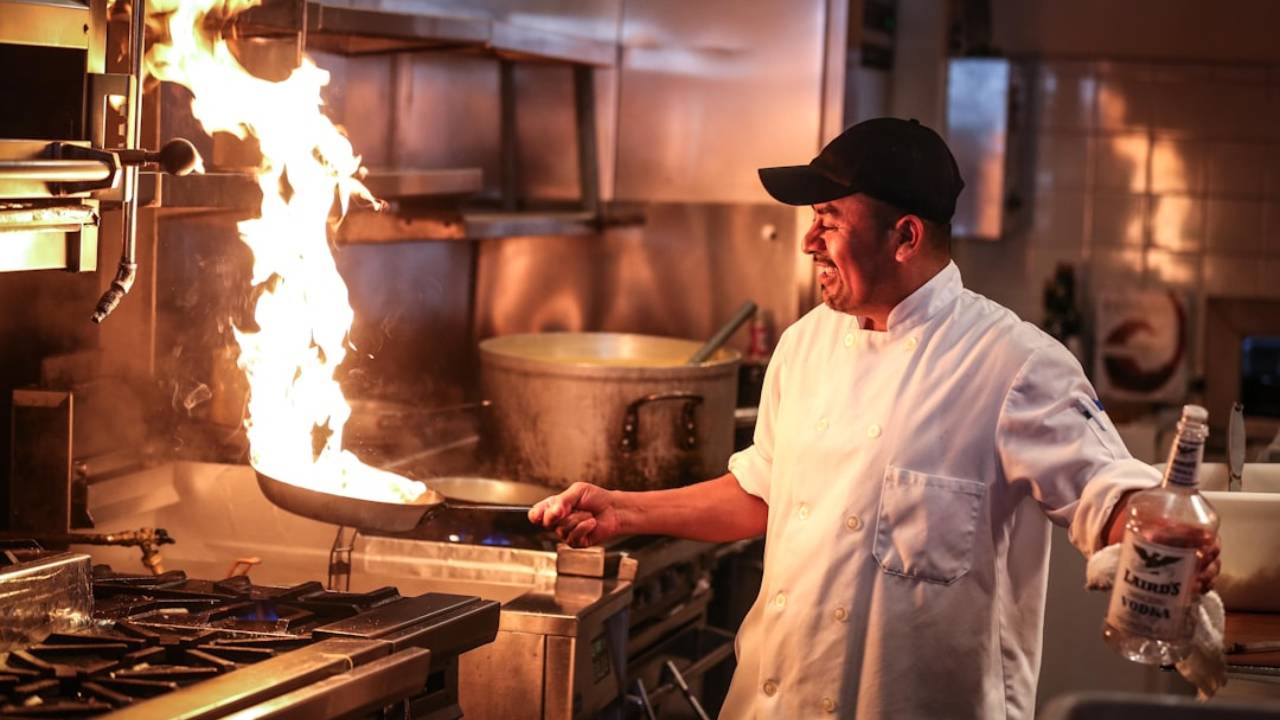
I have walked through more hotel kitchens than I can count. And I can tell you this from personal experience — the ones that run smoothly, the ones where chefs actually enjoy coming to work, are always the ones where safety is taken seriously. Not as a compliance checkbox. Not as a poster on the wall. But as a lived culture.
The hotel kitchen — or what the French call la cuisine professionnelle — is one of the most physically demanding and hazard-dense workplaces on the planet. Heat, blades, heavy equipment, slippery floors, chemicals, and time pressure all share the same space. According to the U.S. Bureau of Labor Statistics, the food service industry records over 100,000 workplace injuries annually. Hotels alone account for a significant portion of those numbers.
This guide breaks down 100 essential kitchen safety practices across every critical area of the professional hotel kitchen. Each one matters. Each one has saved someone from a trip to the emergency room. Let me walk you through them.
Personal Protective Equipment — L’Équipement de Protection Individuelle
Your body is your most important tool in any kitchen. Protecting it should come before everything else.
1. Non-slip footwear — Kitchen floors get wet. They get greasy. A slip on a tile floor moving at full service speed can break an ankle or worse. Invest in proper closed-toe, non-slip kitchen shoes. The ASTM F2913 standard is the benchmark to look for when buying.
2. Cut-resistant gloves — Mandoline slicers, oyster knives, and meat cleavers have sent more cooks to urgent care than almost any other tool. Cut-resistant gloves, rated at ANSI Level A4 or higher, dramatically reduce laceration injuries.
3. Heat-resistant oven mitts — Grabbing a 500-degree sheet pan with a damp cloth is a recipe for a third-degree burn. Silicone-lined mitts rated to at least 450°F are essential near convection ovens and salamanders.
4. Chef’s apron — A heavy-duty apron protects against splashing hot liquids, oil burns, and minor cuts. In hotel kitchens where banquet production involves enormous volumes of boiling stocks, this is not optional.
5. Hair restraints — Beyond the obvious hygiene concern, loose hair near open flames is a fire hazard. Every chef in a hotel kitchen should wear a toque, hairnet, or skull cap at all times.
6. Safety glasses near deep fryers — Hot oil can pop and splatter violently. When adding wet items to hot oil, safety glasses can prevent serious eye injuries that chefs often don’t anticipate.
7. Proper uniform fit — Loose sleeves catch flames. Too-tight jackets restrict movement and cause fatigue. The chef’s uniform should fit correctly — double-breasted, with cotton fabric that provides a minimal thermal barrier.
8. Wrist guards for repetitive tasks — Repetitive strain is one of the most underreported injuries in hotel kitchens. Butchers and pastry chefs who knead or slice for hours develop carpal tunnel syndrome at alarming rates. Wrist supports can prevent long-term damage.
9. Back support belts during heavy lifting — Hotel kitchen deliveries involve heavy loads. Stock pots full of liquid weigh over 40 pounds. Back belts are not a cure for poor technique, but they remind staff to engage core muscles and lift properly.
10. Face shields during pressure cooking — Some high-volume hotel operations use commercial pressure cookers. A face shield during opening and monitoring adds a layer of protection against steam burns that standard masks cannot provide.
Knife Safety — La Sécurité des Couteaux
The knife is the most personal tool a chef owns. It’s also statistically the most dangerous.
11. Keep knives razor sharp — A dull knife requires more force, which means less control. More force plus less control equals cuts. Sharpen regularly using a whetstone or professional sharpening service.
12. Always cut away from the body — This is taught on day one of culinary school and forgotten by day three. Every cut should move the blade away from your torso and fingers.
13. Never catch a falling knife — Let it fall. A falling knife wound is almost always worse than the bruised ego of stepping back.
14. Use a proper cutting board — Never cut on stainless steel surfaces, glass, or marble. These dull blades and cause unpredictable deflection. In hotel kitchens, color-coded cutting boards (red for meat, green for vegetables, yellow for poultry, etc.) also prevent cross-contamination.
15. Store knives in a knife roll or magnetic strip — Tossing knives into a drawer is how people lose fingertips. Magnetic strips or proper knife blocks protect both the blade and the next person who reaches into that drawer.
16. Curl your fingers into a “bear claw” grip — This classic guiding hand technique keeps fingertips tucked and knuckles forward, using the flat side of the blade as a guide. Professional hotel kitchens should train every new hire on this before they touch any produce.
17. Announce knife presence when walking — “Sharp!” is the standard call in professional kitchens. When carrying a knife through a busy kitchen, the word “sharp” alerts others to move. It sounds theatrical. It prevents injuries every week.
18. Never leave knives submerged in soapy water — Someone will reach into that sink. The knife will not be visible. The result will be ugly.
19. Clean knives individually after use — Wipe with a damp cloth while holding the spine, moving from heel to tip. Never scrub a knife carelessly across a surface.
20. Inspect knife handles for cracks — A cracked handle can shatter under pressure, especially in busy hotel banquet production when chefs are working quickly. Replace damaged handles immediately.
Fire Safety — La Sécurité Incendie
Hotel kitchens generate enormous heat. Fire risk is constant and real.
21. Know the location of every fire extinguisher — This seems obvious until there’s a grease fire and everyone freezes. In professional kitchens, extinguisher locations should be memorized by every team member.
22. Use Class K extinguishers for grease fires — The NFPA 96 standard specifically requires Class K extinguishers in commercial kitchens. Water and Class A extinguishers will explode a grease fire outward.
23. Never leave cooking oil unattended — Oil reaches its smoke point before it ignites. Once it smokes, auto-ignition is minutes away. Hotel breakfast and banquet kitchens with massive fryers need designated monitoring during peak hours.
24. Keep a lid nearby when sautéing — A pan fire can be smothered instantly by placing a tight lid over the pan. Sliding it off the heat and covering it eliminates oxygen. Simple, fast, effective.
25. Clean exhaust hoods and filters regularly — Grease buildup in exhaust ducts is one of the leading causes of commercial kitchen fires. NFPA 96 recommends cleaning frequency based on cooking volume — heavy use kitchens may need monthly cleaning.
26. Maintain six inches of clearance around open flames — Dish towels, paper orders, cardboard boxes, and plastic wrap all find their way to stovetop areas in busy hotel kitchens. Nothing combustible should be within arm’s reach of an open flame.
27. Inspect gas connections quarterly — Gas leaks are invisible and deadly. The smell of gas should trigger immediate evacuation and a call to the gas company. Professional kitchens should have gas connections inspected by licensed technicians at regular intervals.
28. Train staff on evacuation routes — Every hotel kitchen should conduct a fire evacuation drill at least twice per year. Every team member should know two exit routes from their station.
29. Install automatic fire suppression systems — Most jurisdictions require these above commercial fryers and ranges. They should be inspected semi-annually and tested according to manufacturer specifications.
30. Never prop open fire doors — Hotel kitchen fire doors are not there to annoy staff. They contain fires to a single compartment. Propping them open eliminates that protection entirely.
Food Safety and Temperature Control — La Sécurité Alimentaire
The French term mise en place (everything in its place) extends to temperature discipline as well.
31. Understand the “Danger Zone” — The USDA defines the food temperature danger zone as 40°F to 140°F (4°C to 60°C). Bacteria double every 20 minutes in this range. Hotel kitchens serving hundreds of guests cannot afford to be casual about this.
32. Use calibrated thermometers — Digital probe thermometers should be calibrated daily using the ice water method (32°F/0°C) or boiling water method. A thermometer reading two degrees off can mean serving undercooked chicken to 400 banquet guests.
33. Practice FIFO — First In, First Out — Older ingredients go in front. Newer deliveries go behind. This principle, when applied consistently across hotel walk-in refrigerators, dramatically reduces food spoilage and food safety incidents.
34. Label everything with date and time — Every container of prepared food, every stock, every sauce, every marinade should carry a date label. Health codes in most jurisdictions require it. Common sense demands it.
35. Cool hot foods rapidly — The FDA Food Code requires cooling cooked food from 135°F to 70°F within two hours, and then from 70°F to 41°F within an additional four hours. Ice baths, blast chillers, and shallow pans all help achieve this.
36. Thaw food safely — Never thaw meat at room temperature. Safe thawing methods include refrigerator thawing, cold running water, or microwave if the item will be cooked immediately. Hotel kitchens ordering large volumes for next-day service must plan 24-48 hours ahead for refrigerator thawing.
37. Separate raw proteins from ready-to-eat foods — Cross-contamination from raw poultry to salad greens is a leading cause of hotel-related foodborne illness outbreaks. Raw meats go on lower refrigerator shelves. Ready-to-eat foods go on top.
38. Sanitize food contact surfaces every four hours — High-touch surfaces like prep tables, cutting boards, and slicer blades harbor bacteria even after visible cleaning. NSF International recommends a sanitizing step after every use and every four hours during continuous use.
39. Wash hands after every task change — Hand hygiene is the single most effective food safety intervention in any kitchen. Not just after using the restroom — after touching raw protein, after handling garbage, after touching your face.
40. Monitor walk-in cooler temperatures twice daily — Walk-in refrigerators should hold at 35-38°F. Walk-in freezers at 0°F or below. Log these readings. If a walk-in fails overnight in a hotel kitchen, the financial and safety consequences can be catastrophic.
Slip and Fall Prevention — La Prévention des Chutes
Slips and falls cause more lost workdays in hotel kitchens than any other injury category.
41. Mop spills immediately — Every spill is a potential trip to the floor. In a kitchen with moving staff, hot pans, and sharp tools, a floor slip can cascade into a much worse injury.
42. Use wet floor signage — The moment a mop hits the floor, the sign goes up. This is not optional.
43. Install anti-fatigue mats at workstations — Beyond reducing fatigue (which causes accidents), rubber anti-fatigue mats provide grip and cushioning. They should be inspected for curled edges that can themselves become trip hazards.
44. Keep walkways clear — Boxes, equipment, and stock carts left in transit corridors are accident magnets. Hotel kitchen receiving areas and walk-in corridors should have defined clear paths.
45. Use proper ladder technique when accessing high shelves — Step stools and ladders exist for a reason. Stacking boxes or using a coworker’s shoulders to reach a high shelf is how people fall and fracture bones.
46. Secure floor mats with non-slip backing — Mats that slide when stepped on are worse than no mats. Check that all rubber mats lie flat and grip the floor surface.
47. Ensure adequate lighting throughout the kitchen — OSHA recommends a minimum of 50 foot-candles in food preparation areas. Dim corners, poorly lit walk-ins, and burned-out bulbs create hazards that are 100% preventable.
48. Address wet floor conditions during dishwashing operations — Dish areas in hotel kitchens are chronically wet. Floor drains should be clear and functioning. Perforated rubber mats in dishwashing zones reduce slip risk significantly.
49. Wear footwear at all times — No bare feet, socks only, or open sandals in any hotel kitchen area, regardless of how briefly someone intends to step in.
50. Report uneven flooring immediately — Cracked tiles, raised thresholds, and worn floor surfaces should be flagged to facilities management. These are not cosmetic issues — they are documented liability risks.
Equipment Safety — La Sécurité des Équipements
Commercial kitchen equipment is powerful, fast, and unforgiving.
51. Read manufacturer manuals before operating new equipment — This sounds obvious. It is ignored constantly. Every commercial mixer, slicer, blast chiller, and combi oven has specific safety protocols that generic training does not cover.
52. Never bypass safety guards on slicers — Meat slicers are among the most dangerous pieces of equipment in a hotel kitchen. The blade guard is not optional. Remove it only during cleaning, with the power physically disconnected.
53. Lock out, tag out during cleaning — LOTO (Lock Out, Tag Out) is an OSHA standard (29 CFR 1910.147) that requires equipment to be de-energized and locked before maintenance or cleaning. Hotel kitchens using commercial equipment must train every team member on this process.
54. Inspect power cords and plugs regularly — Frayed cords near water sources in kitchen environments are electrocution hazards. Any damaged cord should be taken out of service immediately.
55. Use equipment only for its intended purpose — A commercial meat grinder is not a dough mixer. A mandoline is not an improvised vegetable dicer. Misusing equipment stresses components, voids warranties, and creates dangerous failure modes.
56. Allow equipment to cool before cleaning — Cleaning a hot flat-top grill or convection oven with chemical cleaner creates dangerous chemical reactions and burns. Follow manufacturer cooldown recommendations.
57. Keep equipment professionally serviced — Commercial kitchen equipment should be on a preventive maintenance schedule. Fryers with failing thermostats and ovens with faulty door gaskets create unpredictable safety hazards during service.
58. Train every team member on emergency stop procedures — Every piece of major kitchen equipment has an emergency stop or kill switch. In a moment of emergency, there is no time to search for it.
59. Stack pots and pans safely — Improperly stacked heavy cookware falls. In a busy hotel kitchen with people moving quickly, a falling stock pot can cause serious injury.
60. Handle pressure cookers with extreme caution — Commercial pressure cookers should only be operated by trained personnel. Depressurizing too quickly, opening before pressure fully releases, or operating with damaged seals can result in explosive decompression.
Chemical Safety — La Sécurité Chimique
Cleaning chemicals in a hotel kitchen environment are potent, often corrosive, and sometimes misused.
61. Store chemicals separately from food — This is both a safety and compliance issue. Chemicals stored near food products create contamination risk. They should be in a dedicated, clearly marked chemical storage area.
62. Label every chemical container — Decanting chemicals into unlabeled spray bottles is a widespread and dangerous practice. Every container must be labeled with its contents and hazard information.
63. Read and follow SDS (Safety Data Sheets) — Every chemical used in a hotel kitchen must have an accompanying Safety Data Sheet, accessible to all staff. These documents describe first aid procedures, PPE requirements, and storage conditions.
64. Never mix chemicals — Bleach and ammonia produce chloramine gas. Bleach and acid produce chlorine gas. These combinations can occur accidentally in commercial kitchens when staff mix cleaning products without understanding the chemistry.
65. Use proper PPE when handling concentrated chemicals — Concentrated degreasers, sanitizers, and descaling agents require chemical-resistant gloves and eye protection. Skin and eye contact with concentrated cleaning chemicals causes serious burns.
66. Dispose of chemicals properly — Pouring chemicals down kitchen drains carelessly can damage plumbing, violate environmental regulations, and create dangerous reactions in the drain system.
67. Train staff on chemical hazards — GHS (Globally Harmonized System) hazard communication training is required by OSHA in the United States. Staff must understand pictograms, signal words, and first aid procedures.
68. Ensure adequate ventilation when using chemical cleaners — Hotel kitchen cleaning often happens in enclosed spaces after hours. Chemical fume buildup in poorly ventilated areas can cause respiratory distress and chemical burns to mucous membranes.
69. Store chemicals at appropriate temperatures — Some cleaning chemicals become unstable or lose effectiveness if stored too hot or too cold. Follow manufacturer storage recommendations.
70. Use dilution stations for consistent chemical concentration — Guessing at chemical dilutions leads to either ineffective sanitization or dangerously concentrated solutions. Automatic dilution stations remove human error from this equation.
Ergonomics and Physical Safety — L’Ergonomie en Cuisine
Hotel kitchen work is physically brutal. Musculoskeletal injuries are the quiet epidemic no one talks about enough.
71. Use proper lifting technique for every lift — Bend at the knees. Keep the load close to your body. Never twist at the waist while holding weight. This technique should be drilled into every hotel kitchen employee, not mentioned once in onboarding.
72. Use mechanical aids for heavy loads — Trolleys, carts, and lift-assist devices exist precisely for the heavy stock movement that characterizes hotel kitchen receiving operations. Use them.
73. Rotate workstation assignments — Spending eight hours doing the same chopping motion destroys tendons. Hotel kitchen management should build rotation schedules that vary physical tasks across the shift.
74. Adjust workstation heights for different staff — A prep table that’s perfect for a six-foot chef destroys the back of a five-foot team member. Adjustable tables or platforms should be available.
75. Take micro-breaks during repetitive tasks — Five minutes of stretching per hour during intensive prep work significantly reduces cumulative strain. This is not laziness. It is injury prevention.
76. Report pain early — The culture of “push through it” in professional kitchens is killing careers. Repetitive strain injuries caught at the early stage are treatable. Ignored for months, they become career-ending conditions.
77. Ensure adequate staffing during heavy service — Understaffing is a safety issue. When a kitchen runs two people short during a 400-cover banquet, fatigue and rushing create the exact conditions that lead to burns, cuts, and falls.
78. Avoid prolonged standing on hard floors without mat support — Hotel kitchens run long shifts. Anti-fatigue matting at every workstation is an investment that pays for itself in reduced absenteeism and injury claims.
79. Design workflow to minimize unnecessary movement — Mise en place is not just about taste — it’s ergonomic. Tools and ingredients arranged within arm’s reach reduce the bending, reaching, and twisting that cause strain injuries.
80. Educate staff on early signs of heat stress — Hotel kitchens in summer, particularly those adjacent to event spaces, can reach dangerous ambient temperatures. Dizziness, nausea, and sudden sweating cessation are warning signs of heat exhaustion. Every team member should recognize them.
Emergency Preparedness — La Préparation aux Urgences
You hope you never need it. You prepare because you might.
81. Maintain a fully stocked first aid kit — Every hotel kitchen should have a first aid kit within 30 seconds of any workstation. It should include burn gel, sterile dressings, bandages, eye wash, and latex-free gloves. Check it monthly.
82. Train staff in basic first aid and CPR — OSHA does not require CPR training for kitchen workers, but statistical common sense does. Burns, choking, and cardiac events happen in professional kitchens.
83. Know the location of the nearest AED — Automated External Defibrillators save lives in cardiac arrest situations. Hotel properties typically have them — every kitchen employee should know where.
84. Post emergency contacts visibly — Local emergency services, the hotel’s internal security line, and the on-call facilities manager number should be posted at every phone station in the kitchen.
85. Conduct regular emergency drills — Not just fire drills. Chemical spill protocols. Medical emergency response. Power outage procedures. Hotel kitchens are complex enough that every emergency type deserves its own rehearsal.
86. Have a clear protocol for gas leaks — Evacuate. Do not flip any switches (electrical sparks can ignite gas). Call the gas company from outside. Do not re-enter until cleared by professionals.
87. Install carbon monoxide detectors — Commercial gas appliances produce CO. Poor ventilation can cause CO accumulation. CO is colorless and odorless and kills before symptoms become recognizable.
88. Have a documented incident reporting system — Every near-miss, minor injury, and equipment failure should be logged. This documentation identifies patterns before they become serious accidents.
89. Establish clear procedures for power outages — Hotel kitchens during power failures face food safety crises. Know when to pull product, how to manually operate emergency lighting, and who to contact.
90. Know how to safely shut down all kitchen equipment — In an emergency evacuation, someone should be able to walk through the kitchen and shut everything down systematically in under two minutes.
Training, Culture, and Compliance — La Formation et la Conformité
Every safety practice in this guide is meaningless without the training and culture to back it up.
91. Conduct safety orientations for every new hire before they touch equipment — No new team member should work a service shift without completing a documented safety orientation specific to the hotel kitchen layout and equipment.
92. Hold monthly safety briefings — Rotate topics. Five minutes at the start of a shift discussing a specific hazard keeps safety present in team consciousness.
93. Create a near-miss reporting culture — Near-miss incidents are early warnings. When staff feel safe reporting them without fear of blame, kitchens catch and fix hazards before they cause injury.
94. Make safety metrics visible — Post days without lost-time incidents. Celebrate milestones. This creates positive social reinforcement around safe behavior.
95. Involve kitchen staff in safety policy development — The people doing the work know where the risks are. Line cooks, prep staff, and dishwashers often see hazards that management misses. Ask them. Act on what they say.
96. Conduct regular safety audits — Walk the kitchen monthly with a checklist. Look for frayed cords, expired extinguishers, unlabeled chemicals, and blocked exits. Document findings. Fix them.
97. Ensure compliance with local health and safety codes — Hotel kitchens operate under layered regulatory oversight — local health departments, fire codes, OSHA, and brand standards. Know your applicable codes and stay current as they change.
98. Reward safe behavior — Recognition for safety compliance is more effective than punishment for violations. Small acknowledgments go a long way in establishing safety as a valued behavior.
99. Debrief after incidents openly and constructively — When something goes wrong, the goal is learning, not blame. A post-incident debrief that focuses on system failures rather than individual fault produces better safety outcomes.
100. Lead by example from the top — A head chef who ignores safety culture destroys it completely, no matter how many posters are on the wall. When leadership treats safety seriously — wears PPE, calls out hazards, reports near-misses — the entire kitchen follows.
Conclusion
Running a hotel kitchen is one of the most complex operational challenges in hospitality. You are managing food quality, speed, staff, equipment, and guest expectations simultaneously, every single service. Safety cannot be a background concern — it has to be woven into how every station operates, every shift begins, and every team member thinks about their work.
The 100 practices I have outlined here are not theoretical. They come from real kitchens, real accidents, and real consequences. Implementing them systematically, building the culture to support them, and training your team to live them will not just reduce injuries. It will build a better kitchen — one where chefs last longer, perform better, and take genuine pride in their craft.
The French culinary tradition that defines so much of hotel kitchen culture has always placed discipline at its center. La discipline en cuisine is not about rigidity. It is about respect — for the craft, for the ingredients, and above all, for the people who show up every day and do the work.
Keep them safe.
Frequently Asked Questions
What are the most common kitchen injuries in hotel kitchens and how can they be prevented?
The most frequent injuries in professional hotel kitchens are cuts from knives and slicers, burns from hot surfaces and liquids, slips and falls on wet floors, back injuries from heavy lifting, and repetitive strain injuries. Prevention involves a combination of proper PPE, training protocols, LOTO procedures for equipment, anti-fatigue matting, ergonomic workstation design, and a culture where staff feel safe reporting hazards before they cause injury.
What food safety temperature standards must hotel kitchens follow?
Hotel kitchens must keep cold foods at or below 40°F (4°C) and hot foods at or above 140°F (60°C). The range between these temperatures is the USDA-defined danger zone where bacteria multiply rapidly. Cooked foods must be cooled from 135°F to 70°F within two hours, and then to 41°F within the next four hours. Thermometers must be calibrated daily, and walk-in cooler temperatures should be logged twice per shift.
How often should hotel kitchens conduct fire safety training?
At minimum, hotel kitchens should conduct fire evacuation drills twice per year. Monthly safety briefings that rotate through fire-related topics — extinguisher use, exhaust hood cleaning, grease fire response, gas shutoff procedures — keep the knowledge fresh. All new staff should receive fire safety training as part of their kitchen orientation before their first service shift.
What does LOTO mean and why is it critical in hotel kitchen settings?
LOTO stands for Lock Out, Tag Out — an OSHA standard (29 CFR 1910.147) requiring that all energy sources to equipment be isolated and physically locked before any cleaning, maintenance, or servicing takes place. In hotel kitchens, this primarily applies to commercial slicers, mixers, grinders, and dishwashing equipment. Without LOTO, accidental equipment activation during cleaning is a leading cause of severe lacerations and crush injuries.
What are the legal requirements for kitchen safety in hotels?
Hotel kitchens must comply with OSHA workplace safety standards, local and state health department codes, NFPA 96 for commercial cooking ventilation and fire suppression, FDA Food Code for food handling and temperature control, and local fire codes for equipment placement, extinguisher type, and emergency egress. Many hotel brands also layer proprietary safety audit standards on top of these regulatory baselines. Non-compliance can result in fines, closures, and significant civil liability following an injury or foodborne illness outbreak.