
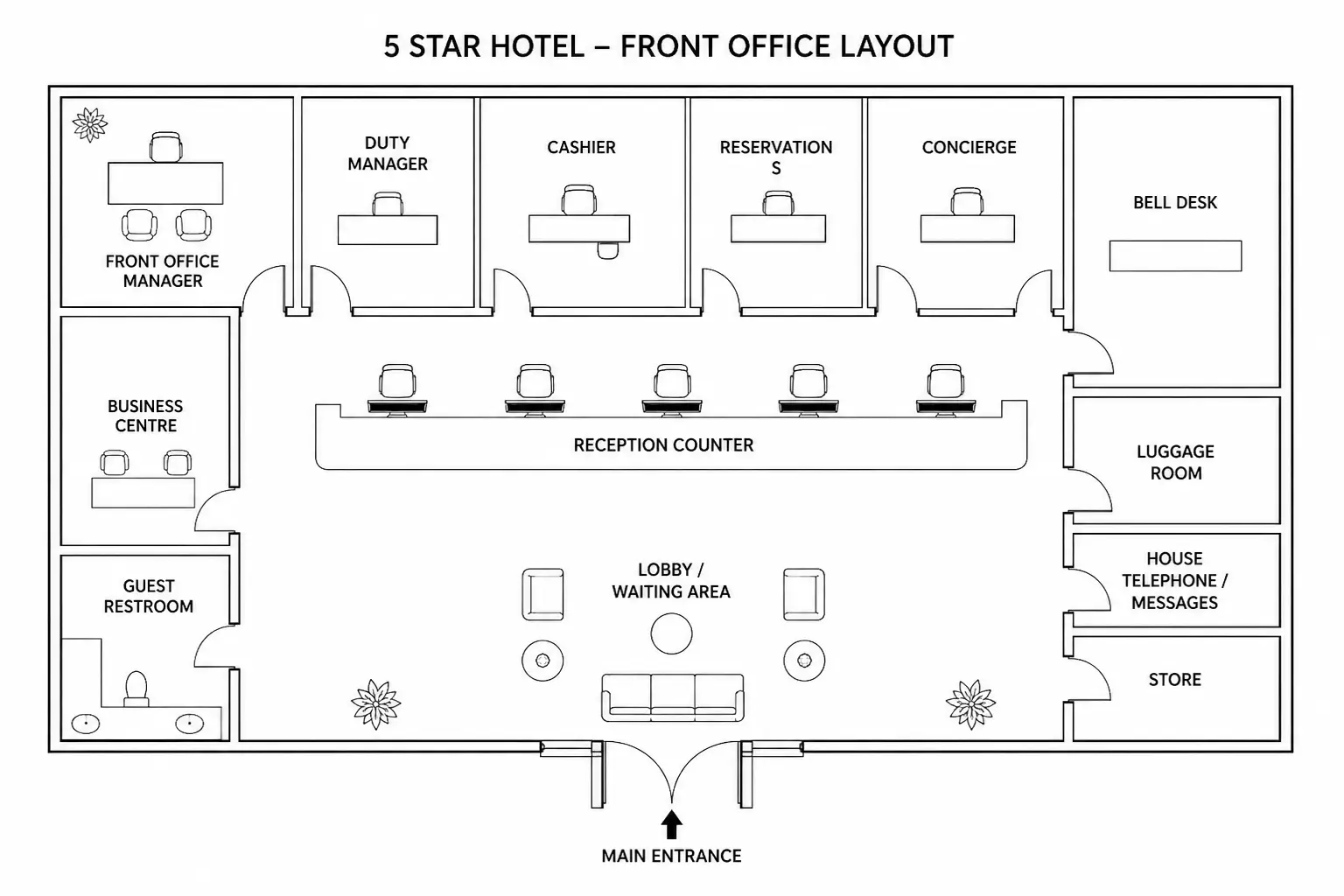
The front office desk is one of the most important areas in any hotel. It is often called the “heart” or “nerve center” of hotel operations because this is where most guest interactions begin and end. When a guest enters a hotel, the first place they usually visit is the front desk. This makes the design and layout of the front office desk extremely important for both guest satisfaction and operational efficiency.
A well-planned front office desk layout helps in smooth check-in and check-out processes, reduces waiting time, improves staff productivity, and creates a positive first impression. According to hospitality studies, nearly 70% of guest satisfaction is influenced by first impressions, and the front desk plays a major role in that experience.
In this article, you will learn everything about the front office desk layout, including its definition, components, types, design considerations, and modern trends. This guide is especially useful for hotel management students, hospitality professionals, and anyone interested in hotel operations.
What is Front Office Desk Layout?
The front office desk layout refers to the physical arrangement and design of the reception area in a hotel where guests interact with staff. It includes the positioning of counters, workstations, equipment, and supporting areas to ensure smooth operations.
The concept of front office layout has evolved over time. In earlier days, hotels used simple wooden counters mainly for check-in and key handling. However, with the growth of the hospitality industry and the introduction of technology like Property Management Systems (PMS), the layout has become more advanced and functional.
A front office desk layout is not just about furniture placement. It is a combination of design, functionality, workflow, and guest experience. It ensures that hotel staff can perform their duties efficiently while providing excellent service to guests.
There are two important aspects of front office layout:
- Design layout: Focuses on the physical appearance, style, and aesthetics
- Functional layout: Focuses on workflow, efficiency, and operations
A good layout balances both aspects to create a professional and welcoming environment.
Objectives of an Effective Front Office Desk Layout
The main goal of a front office desk layout is to improve both guest experience and staff efficiency. A well-designed layout serves multiple purposes and supports overall hotel operations.
- Smooth Guest Check-in and Check-out Process
A properly designed desk layout ensures that guests can check in and check out quickly without confusion or delays. Studies show that long waiting times are one of the top reasons for guest dissatisfaction. A clear and organized layout reduces congestion and improves service speed. - Efficient Staff Workflow and Communication
Staff members need enough space and proper arrangement of tools to perform tasks efficiently. A good layout allows easy communication between departments like housekeeping and reservations. - Security and Control
The front desk handles sensitive guest information and financial transactions. A well-planned layout ensures secure storage of data and controlled access to systems. - Enhanced Guest Experience
The design and layout create the first impression. A welcoming and organized desk makes guests feel comfortable and valued. - Space Optimization
Hotels need to use available space efficiently. A smart layout ensures maximum use of space without making the area look crowded.
Key Components of Front Office Desk Layout
Reception Counter
The reception counter is the most visible part of the front office. It is where guests interact directly with hotel staff. The height and design of the counter are very important. It should be comfortable for both guests and employees.
Modern hotels often use dual-height counters to serve both standing guests and those with accessibility needs. The design should also match the hotel’s branding and theme.
The reception counter must include:
- Computer systems
- Telephone
- Key card system
- Guest registration area
A well-designed counter improves communication and creates a professional image.
Workstations
Workstations are the areas behind the front desk where staff perform their tasks. These include computers, printers, and other equipment.
Each workstation should be designed for comfort and efficiency. Poor workstation design can lead to fatigue and reduced productivity. According to workplace studies, ergonomic design can increase productivity by up to 20%.
Workstations should allow:
- Easy movement of staff
- Quick access to systems
- Proper lighting and ventilation
Cashiering Section
The cashiering section is responsible for handling payments and billing. This area must be secure and organized.
It includes:
- Cash drawers
- POS systems
- Billing software
Security is very important here. Hotels often use surveillance systems and restricted access to protect financial data.
Concierge or Information Desk
In larger hotels, a separate concierge desk is provided. This area helps guests with services like booking tours, arranging transport, and providing local information.
A concierge desk adds value to guest experience and improves service quality.
Key and Mail Handling Area
Traditionally, hotels used key racks to store room keys. Today, most hotels use digital key card systems. However, the concept remains important.
This area also handles guest messages and mail. Proper organization ensures that no information is lost.
Back Office Support Area
The back office supports front desk operations. It includes administrative work, record keeping, and coordination with other departments.
This area is usually not visible to guests but plays a critical role in smooth operations.
Types of Front Office Desk Layouts
- Linear Layout
This is the most common type of layout. The desk is arranged in a straight line. It is simple and suitable for small and medium hotels. - Circular or Semi-Circular Layout
This layout allows better interaction between staff and guests. It creates a more welcoming environment and is often used in luxury hotels. - Island Layout
In this design, the desk is placed in the center of the lobby. Staff can interact with guests from all sides. It is ideal for large hotels with high guest traffic. - Zoned Layout
Different areas are assigned for specific tasks like check-in, concierge, and cashier. This reduces confusion and improves efficiency.
Each type has its own advantages depending on hotel size, category, and guest volume.
Design Considerations in Front Office Desk Layout
Designing a front office desk requires careful planning. Several factors must be considered to ensure functionality and comfort.
- Ergonomics: Staff should be able to work comfortably for long hours
- Accessibility: The desk should be usable by all guests, including those with disabilities
- Technology Integration: Modern systems like PMS and self-check-in kiosks should be included
- Lighting: Proper lighting improves visibility and ambiance
- Privacy: Guests should feel secure while sharing personal information
- Aesthetics: The design should reflect the hotel’s brand identity
According to industry reports, hotels that invest in good design see a 15–25% increase in guest satisfaction scores.
Importance of Front Office Desk Layout in Hotel Operations
The front office desk layout plays a major role in overall hotel performance.
First, it creates the first impression. Guests often judge the quality of a hotel within the first few minutes. A clean and organized desk builds trust and confidence.
Second, it improves operational efficiency. Staff can work faster and more effectively when the layout is well planned.
Third, it increases guest satisfaction. Faster service and better interaction lead to positive reviews and repeat visits.
Finally, it supports brand image. A stylish and modern front desk reflects professionalism and quality.
Modern Trends in Front Office Desk Layout
The hospitality industry is constantly evolving, and front office design is changing with it.
- Open lobby concepts are becoming popular
- Self-check-in kiosks reduce waiting time
- Mobile check-in allows guests to skip the desk
- Personalized service areas improve guest interaction
- Minimalist designs create a modern look
According to recent trends, over 60% of hotels are adopting digital check-in solutions to improve efficiency.
Common Mistakes in Front Desk Layout Design
Many hotels make mistakes while designing their front desk. These mistakes can affect both operations and guest experience.
- Poor space planning leads to congestion
- Lack of privacy makes guests uncomfortable
- Inadequate workspace reduces staff efficiency
- Ignoring technology needs creates delays
- Bad lighting affects visibility
Avoiding these mistakes is essential for creating an effective layout.
Best Practices for Designing Front Office Desk Layout
- Plan according to hotel size and guest volume
- Ensure smooth workflow between departments
- Focus on guest comfort and accessibility
- Use modern technology
- Balance design and functionality
- Provide proper staff training
- Maintain cleanliness and organization
- Use durable materials
- Ensure security measures
- Regularly update design based on trends
Following these practices helps in creating a successful front office layout.
Conclusion
The front office desk layout is a critical part of hotel operations. It is not just about design but also about functionality, efficiency, and guest experience. A well-planned layout improves service quality, increases staff productivity, and enhances guest satisfaction.
As the hospitality industry continues to grow, the importance of front office design will also increase. Hotels must focus on creating layouts that are modern, efficient, and guest-friendly.
In simple terms, a good front desk layout is not just furniture—it is a powerful tool that helps hotels succeed.
Frequently Asked Questions (FAQs)
1. What is the main purpose of a front office desk layout?
The main purpose is to ensure smooth operations, improve guest experience, and support staff efficiency.
2. What are the most common types of front desk layouts?
Linear, circular, island, and zoned layouts are the most common types.
3. Why is front office design important in hotels?
It creates the first impression and directly affects guest satisfaction and operational efficiency.
4. What technology is used in modern front desks?
Hotels use PMS systems, self-check-in kiosks, mobile apps, and digital key systems.
5. How can hotels improve their front desk layout?
By focusing on ergonomics, accessibility, technology integration, and efficient space planning.