
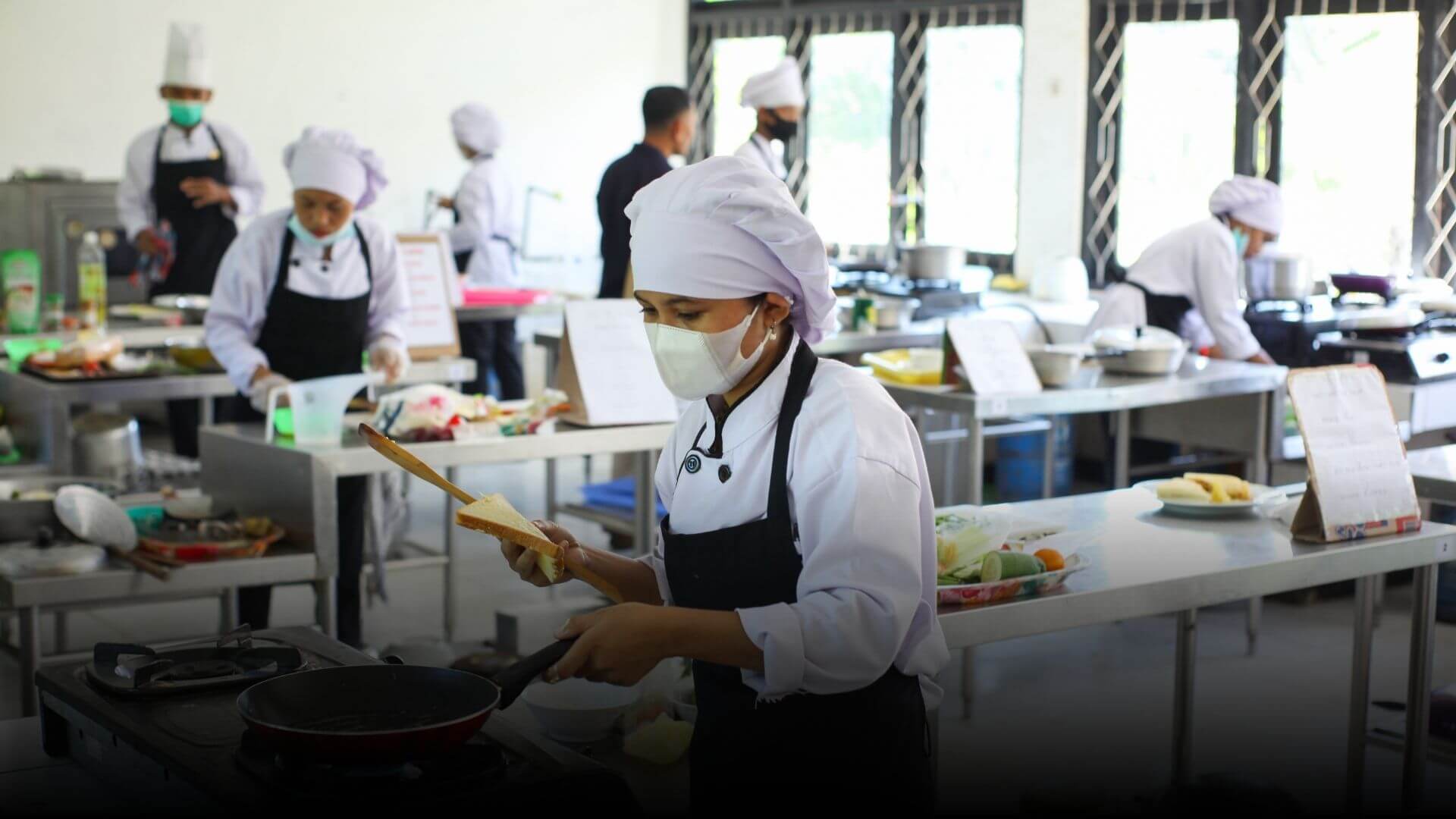
I have spent enough time watching kitchens run like chaos to understand one thing clearly — a cooking team does not succeed by luck. It succeeds by rhythm. By structure. By people who understand not just recipes, but each other.
When we talk about an effective cooking team, we are not just talking about chefs chopping vegetables or plating dishes. We are talking about a system. A living, breathing brigade. The word brigade de cuisine comes from French culinary tradition, introduced by Georges Auguste Escoffier in the late 19th century. He structured kitchens like military units to improve speed, discipline, and clarity.
And today? That same idea still drives the best kitchens in the world.
In this article, I will walk you through how a cooking team can truly work effectively. Not theory. Not generic advice. But real, grounded practices that bring results. You’ll see how communication, structure, timing, and mindset shape everything that comes out of a kitchen.
Understanding the Foundation of a Cooking Team
Before anything else, we need to define what a cooking team actually is. A cooking team is not just a group of people preparing food. It is a coordinated unit where each member performs a specific role to achieve a common goal — delivering consistent, high-quality dishes.
The concept of mise en place, a French term meaning “everything in its place,” sits at the heart of this system. It is not just about arranging ingredients. It reflects discipline, preparation, and readiness.
In professional kitchens, studies show that teams using structured mise en place reduce service errors by up to 30%. That is not small. That is the difference between chaos and control.
Each team member must understand their role clearly. From the chef de partie to the commis chef, responsibilities should never overlap in a confusing way. When roles blur, mistakes multiply.
I always think of it like an orchestra. If two people try to play the same note at the wrong time, the harmony breaks.
A strong foundation builds trust. And trust builds speed.
Clear Communication: The Backbone of Efficiency
If you ask me what breaks a kitchen first, I won’t say lack of skill. I will say poor communication.
In a busy kitchen, seconds matter. A delayed call-out, a misunderstood instruction, or a missed order can ripple through the entire team. This is why kitchens rely on sharp, direct communication — often loud, always precise.
Terms like “Yes, Chef!” are not about hierarchy alone. They confirm understanding. They reduce doubt.
Research in hospitality management shows that kitchens with structured communication systems improve order accuracy by nearly 25%. That is huge during peak hours.
French kitchens often use short command phrases. Simple. Direct. No confusion.
I make it a rule — never assume someone understood. Confirm it.
Eye contact helps. Repeating instructions helps. Even body language matters when noise levels rise.
Communication is not about talking more. It is about saying exactly what needs to be said — nothing extra, nothing missing.
Defined Roles and Responsibilities
An effective cooking team works like a well-oiled machine because each part knows its job.
The brigade system divides the kitchen into clear sections. You have the saucier handling sauces, the garde manger preparing cold dishes, and the pâtissier working on desserts.
This division is not random. It comes from centuries of refinement.
When roles are clearly defined, accountability becomes natural. If something goes wrong, the team knows where to fix it.
Without structure, tasks overlap. People step on each other’s toes. Time gets wasted.
I have seen kitchens where three people try to do one job while another task gets ignored completely.
That never ends well.
According to industry data, kitchens with role clarity reduce preparation time by up to 20%. That is a direct gain in productivity.
Everyone should know their station. Their tools. Their responsibilities.
Clarity removes hesitation. And hesitation slows everything down.
The Power of Mise en Place
I cannot talk about effective cooking teams without diving deeper into mise en place. It is not just preparation. It is a mindset.
Before service begins, every ingredient must be measured, chopped, and ready. Every tool must be clean and accessible. Every station must be organized.
This reduces stress during peak hours.
Studies show that chefs who follow strict mise en place routines complete tasks 40% faster during service compared to those who prepare on the go.
That is a massive difference.
But here’s what people often miss — mise en place is not just physical. It is mental.
You prepare your mind as well.
You anticipate orders. You visualize the flow. You remove uncertainty before it even appears.
I like to say — a calm kitchen during service is built before service even begins.
Preparation creates confidence. And confidence creates speed.
Time Management and Workflow Optimization
Timing is everything in a kitchen.
You cannot serve a dish where one component is hot and the other is cold unless it is intentional. Everything must come together at the right moment.
This is where workflow planning becomes critical.
Teams often use a system called “ticket management,” where orders are tracked and prioritized. It ensures that dishes leave the kitchen in sequence.
A study in restaurant operations found that optimized workflow systems reduce customer wait time by 15–25%.
That directly impacts customer satisfaction.
I always encourage teams to think ahead. Not just react.
Start what takes the longest first. Use downtime wisely. Prep during quiet moments.
Even small adjustments — like arranging tools in reach — can save seconds. And those seconds add up.
Efficiency is not about rushing. It is about moving with purpose.
Leadership in the Kitchen
Every effective cooking team needs a strong leader.
Usually, that role belongs to the head chef or chef exécutif. But leadership is not about shouting orders. It is about direction, control, and support.
A good leader sets the tone.
They stay calm under pressure. They make quick decisions. They guide the team without creating fear.
According to workplace studies, teams with supportive leadership perform 30% better under stress.
That is significant in a high-pressure environment like a kitchen.
I have noticed that the best chefs lead by example. They step in when needed. They correct mistakes without breaking morale.
Leadership is not authority alone. It is responsibility.
And when a leader earns respect, the entire team moves with confidence.
Hygiene and Safety Standards
Cleanliness is not optional in a kitchen. It is essential.
Food safety standards exist for a reason — to protect both the customer and the team.
The term haute cuisine may sound glamorous, but behind it lies strict discipline in hygiene.
Proper handwashing, sanitized surfaces, and correct food storage can reduce contamination risks by over 50%, according to global food safety reports.
Ignoring hygiene can shut down an entire operation.
I always remind teams — a clean kitchen is a safe kitchen.
But safety goes beyond food.
Knife handling, fire safety, and proper equipment use are just as important.
An effective team watches out for each other.
Because one mistake can cost more than just a dish.
Continuous Learning and Skill Development
A strong cooking team never stops learning.
Food evolves. Techniques evolve. Customer expectations evolve.
And if the team does not grow, it falls behind.
Training sessions, skill workshops, and cross-learning between stations can improve overall team performance by 20%, based on hospitality training data.
French culinary tradition values mastery. Terms like savoir-faire (know-how) reflect deep skill and understanding.
I believe every cook should stay curious.
Try new techniques. Learn from mistakes. Observe others.
Growth keeps the team sharp.
And a sharp team delivers excellence consistently.
Team Spirit and Collaboration
At the end of the day, a kitchen is built on people.
Skill matters. Systems matter. But teamwork matters more.
When team members support each other, everything runs smoother.
Helping a teammate during rush hour. Sharing knowledge. Staying positive under pressure — these small actions create a strong culture.
Studies show that collaborative teams improve efficiency by up to 35%.
That is not just performance. That is harmony.
I have seen kitchens where tension destroys output. And others where teamwork lifts everyone.
The difference is mindset.
Respect each role. Appreciate effort. Communicate openly.
Because a kitchen is not just a workplace.
It is a team.
Conclusion
When I step back and look at what makes a cooking team truly effective, it always comes down to a few key things — structure, preparation, communication, and people.
The brigade de cuisine system gave us the blueprint. But it is the human element that brings it to life.
An organized kitchen is faster. A communicative team is sharper. A supportive environment is stronger.
And when all these pieces come together, something powerful happens.
The kitchen flows.
Not perfectly. But purposefully.
And that is where great food begins.
FAQs
1. What is the most important factor for an effective cooking team?
Clear communication is the most critical factor. Without it, even skilled teams struggle to perform efficiently.
2. What does mise en place mean in cooking?
Mise en place is a French term meaning “everything in its place.” It refers to preparing and organizing ingredients and tools before cooking.
3. How can kitchen workflow be improved?
By planning tasks in advance, using structured order systems, and minimizing unnecessary movement during service.
4. Why is teamwork important in a kitchen?
Teamwork ensures smooth operations, reduces errors, and improves overall efficiency during high-pressure situations.
5. What is the brigade de cuisine system?
It is a structured kitchen hierarchy developed in French culinary tradition to assign clear roles and improve efficiency.