
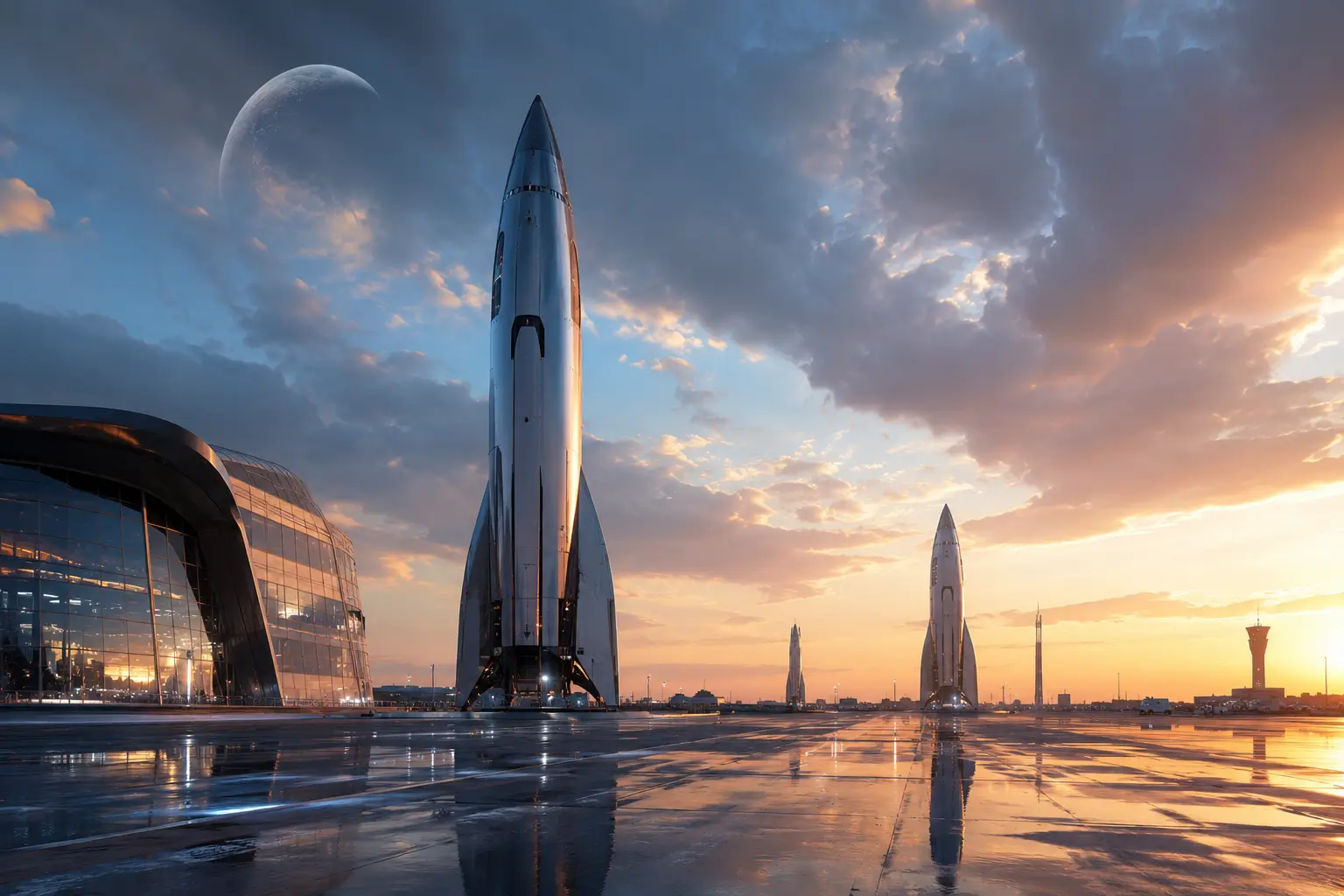
For decades, space travel belonged to government agencies, elite astronauts, and Cold War politics. Ordinary people could only watch rocket launches on television and dream about floating in zero gravity. That reality is changing fast. I now see space tourism moving from science fiction to commercial business, and startups are driving this transformation.
The concept of space tourism refers to commercial travel experiences designed for private individuals who want to visit space for leisure, adventure, research, or luxury purposes. The term emerged in the late 1990s after American businessman Dennis Tito became the first self-funded space tourist in 2001. He reportedly paid nearly $20 million to travel aboard a Russian spacecraft to the International Space Station. That trip changed everything.
Today, private companies are building reusable rockets, space hotels, lunar tourism programs, and high-altitude balloon experiences. According to industry reports, the global space tourism market was valued at more than $800 million in recent years and analysts expect it to cross several billion dollars before 2030.
The French phrase nouvelle frontière perfectly describes this industry because entrepreneurs are exploring a completely new frontier of travel. Startups are no longer asking whether people want to visit space. They are asking how quickly they can make it affordable, safe, and profitable.
This industry remains young. It carries massive risks. It demands enormous capital. Yet investors continue pouring billions into these startups because the long-term rewards could reshape tourism forever.
What Is Space Tourism?
Space tourism means commercial travel beyond Earth’s atmosphere for recreational purposes. It includes suborbital flights, orbital trips, lunar tourism missions, and future stays in space hotels.
The origin of modern space tourism can be traced back to government-funded space programs during the 1960s space race between the United States and the Soviet Union. At that time, organizations like NASA and Roscosmos focused entirely on scientific missions.
Everything changed when private aerospace companies entered the picture. They introduced reusable technology that dramatically reduced launch costs.
There are currently four major categories of space tourism:
- Suborbital tourism – Travelers cross the Kármán line and experience a few minutes of weightlessness before returning to Earth.
- Orbital tourism – Travelers orbit Earth for several days.
- Lunar tourism – Future trips around or on the Moon.
- Space hospitality – Hotels and private stations in orbit.
- Research tourism – Private travelers conducting scientific experiments.
- Adventure tourism – Extreme experiences for thrill seekers.
- Luxury tourism – Premium travel experiences for wealthy clients.
- Educational tourism – Programs designed for students and researchers.
- Balloon tourism – High-altitude luxury capsules.
- Future Mars tourism – Long-term commercial exploration goals.
Ticket prices currently range from $125,000 for balloon flights to over $50 million for orbital missions. Expensive? Absolutely. But early aviation was once considered a luxury too.
Why Startups Are Entering the Space Tourism Industry
I find it fascinating how startups are entering one of the world’s most expensive industries.
Traditional aerospace companies focused heavily on defense contracts and government partnerships. Startups saw a gap in consumer travel.
Several reasons explain this boom:
- Declining launch costs due to reusable rockets
- Rising billionaire investments
- Public fascination with space exploration
- Technological advancements in propulsion systems
- Growing luxury travel demand
- Media attention around private missions
- Government support for private space ventures
- Satellite innovation spillovers
- High long-term profit potential
- Brand prestige
SpaceX reduced launch costs significantly through reusable rockets. Before reusable systems, a rocket launch could cost hundreds of millions. Reusability changed economics entirely.
Venture capital firms invested billions into aerospace startups globally. Investors understand that whoever dominates commercial space travel may control an entirely new tourism segment.
Consumers also crave unique travel experiences. Luxury travelers already spend millions on private islands, deep-sea tourism, and polar expeditions. Space naturally becomes the next status symbol.
Major Startups Leading Space Tourism Innovation
Several startups and private companies are shaping this market aggressively.
1. Blue Origin
Founded by Jeff Bezos, Blue Origin offers suborbital tourism through New Shepard rockets. Passengers experience several minutes of weightlessness.
2. Virgin Galactic
Founded by Richard Branson, Virgin Galactic focuses on commercial suborbital tourism.
3. Space Perspective
This startup offers balloon-based luxury travel experiences.
4. Axiom Space
Axiom plans private space station tourism.
5. SpaceX
Its orbital tourism missions attract global attention.
6. Orbital Assembly Corporation
Focused on building space hotels.
7. Zero 2 Infinity
High-altitude balloon tourism company.
8. World View Enterprises
Offers near-space balloon experiences.
9. Bigelow Aerospace
Known for expandable space habitats.
10. Space Adventures
One of the earliest commercial operators.
These companies are transforming dreams into commercial packages.
Technologies Powering Space Tourism Startups
Technology sits at the heart of this business.
- Reusable rockets
- Space capsules
- AI navigation systems
- Space suits
- Advanced propulsion systems
- Heat-resistant materials
- Space habitat engineering
- Balloon flight systems
- Safety monitoring tools
- Autonomous landing technology
Reusable rockets remain the biggest breakthrough. SpaceX demonstrated that rockets can land vertically and fly again.
Advanced materials protect travelers from extreme temperatures during atmospheric re-entry.
Artificial intelligence helps improve route calculations, fuel efficiency, and passenger safety.
Without these technologies, commercial space travel would remain impossible.
Challenges Space Tourism Startups Face
This industry looks glamorous, but serious challenges remain.
- High development costs
- Safety concerns
- Regulatory barriers
- Environmental criticism
- Limited customer base
- Insurance complications
- Long training periods
- Medical risks
- Infrastructure shortages
- Competition from major aerospace firms
Rocket failures can destroy investor confidence overnight.
Environmental groups criticize carbon emissions generated during launches.
Governments are still creating laws for private space travel. Regulations remain unclear in many countries.
Most importantly, affordability remains a massive barrier.
Economic Impact of Space Tourism Startups
Space tourism may create ripple effects across multiple industries.
- Aerospace manufacturing
- Hospitality
- Insurance
- Luxury travel
- Training centers
- Research labs
- Transportation
- Space food production
- Robotics
- Employment generation
Morgan Stanley once projected the global space economy could exceed $1 trillion by 2040.
Hotels may eventually partner with orbital stations.
Luxury travel agencies may sell Moon packages.
Universities may launch training programs.
The possibilities are enormous.
Future of Space Tourism Startups
The future feels ambitious.
SpaceX continues discussing Mars colonization through Starship.
Blue Origin wants millions living and working in space.
Private lunar vacations may become reality within the next two decades.
French business term raison d’être fits perfectly here because these startups exist to redefine travel itself.
As costs decline, middle-income travelers may eventually access space experiences.
That may sound impossible today. People once said the same thing about air travel.
Conclusion
Space tourism startups are building an industry that seemed impossible just twenty years ago. They are combining engineering, hospitality, luxury travel, and entrepreneurship into one ambitious market.
The road ahead will not be smooth. Safety concerns, environmental questions, and high prices remain serious obstacles.
Still, I believe the momentum is real.
From suborbital adventures to orbital hotels and lunar vacations, startups are reshaping how humanity thinks about travel.
The next great tourism destination may not be a beach resort in the Maldives.
It may be Earth viewed from space.
FAQs
What is space tourism?
Space tourism is commercial travel to space for leisure, recreation, research, or luxury experiences.
How much does space tourism cost?
Prices range from $125,000 for balloon experiences to over $50 million for orbital missions.
Which companies offer space tourism?
Major companies include Blue Origin, Virgin Galactic, SpaceX, and Axiom Space.
Is space tourism safe?
It is improving, but risks remain due to technical failures, medical concerns, and environmental challenges.
When will normal people afford space travel?
Experts believe prices may fall significantly over the next few decades as technology improves and competition grows.