
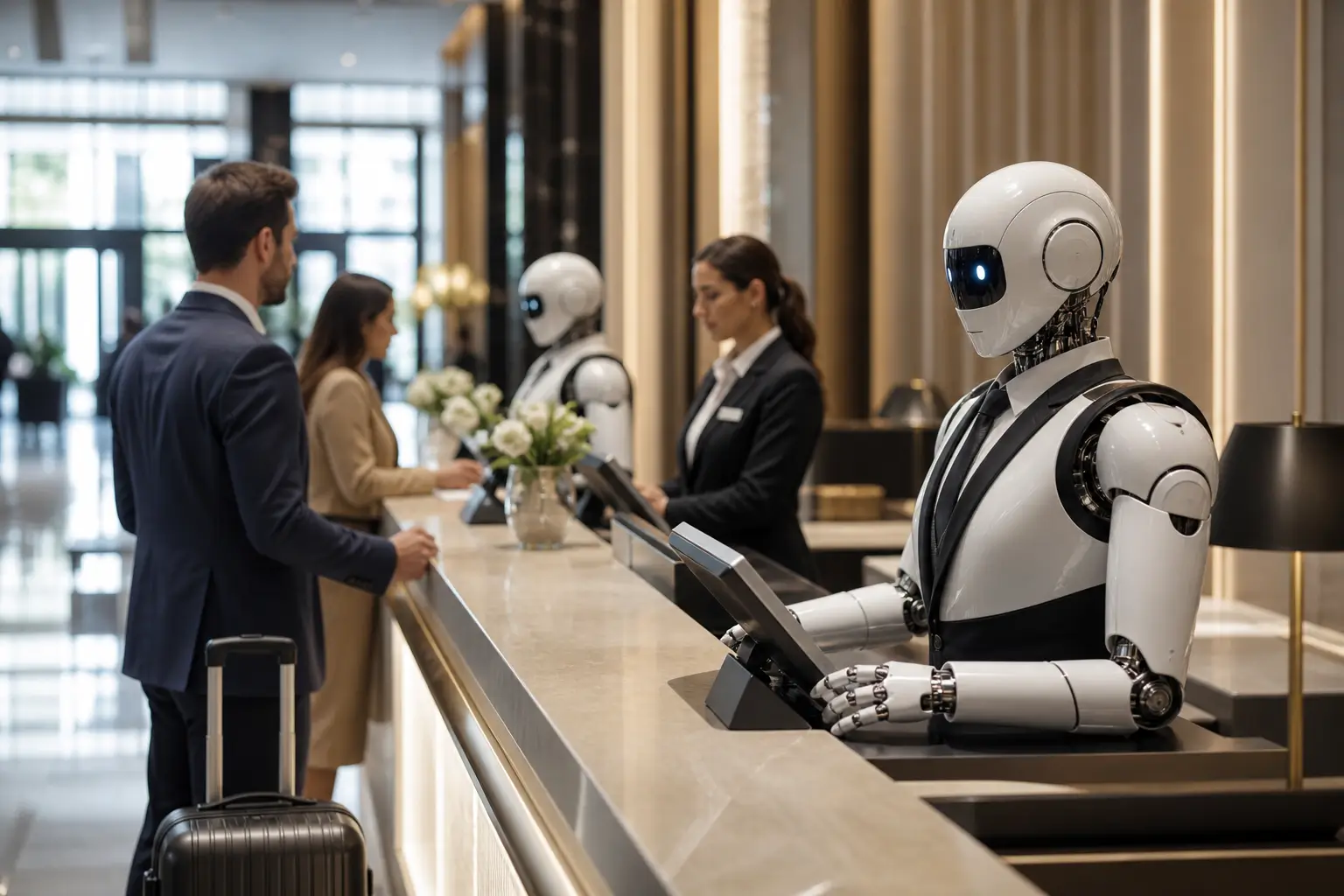
The front office has always been the heartbeat of the hotel business. It is the first place guests interact with when they enter a property, and in many cases, it shapes their entire impression of the hotel. Years ago, front office operations depended heavily on paperwork, manual reservations, handwritten guest records, and face-to-face communication. The process was slow, repetitive, and often full of errors. Today, that traditional model is changing rapidly.
I have noticed that modern travelers expect speed, personalization, and convenience. They want instant booking confirmations, fast check-ins, digital room keys, and personalized service. According to a report by Statista, the global hospitality market is expected to cross trillions of dollars in value in the coming years, and technology is playing a major role in that growth. Hotels that fail to adapt may struggle to survive in a highly competitive market.
Artificial Intelligence, automation, cloud systems, biometrics, smart devices, and contactless technology are transforming hotel front office operations. The French term raison d’être means “reason for existence,” and in today’s hospitality world, technology has become the new raison d’être for delivering better guest experiences.
In this article, I will explain the latest technology trends and AI innovations in hotel front office operations in detail and show how they are reshaping the hospitality industry.
Evolution of Front Office Technology in Hotels
The hotel front office was once entirely manual. Receptionists maintained reservation books, tracked room availability through physical charts, and handled guest concerns through direct communication. This system worked for decades but created many limitations.
The introduction of computers in the 1980s changed hotel operations forever. Property Management Systems (PMS) allowed hotels to automate bookings, billing, and room management. Later, internet booking platforms transformed reservations.
Today, hotels use cloud computing, mobile applications, and AI-powered systems to streamline front desk functions.
Major changes include:
- Faster reservations through online systems
- Real-time room inventory management
- Automated billing systems
- Digital guest records
- Integrated communication channels
- Mobile check-ins
- AI-powered customer support
- Smart room assignment
- Personalized guest experiences
- Data-driven decision making
For example, Marriott International and Hilton Hotels & Resorts have invested heavily in digital transformation to improve front office efficiency.
The French phrase nouvelle technologie means “new technology,” and it perfectly describes the shift happening in hospitality today.
Artificial Intelligence in Hotel Front Office Operations
Artificial Intelligence is changing how front office departments interact with guests. AI systems can process data, predict customer preferences, and automate repetitive tasks.
Hotels now use AI for:
- Chatbots handling booking queries
- Personalized room recommendations
- Automated upselling
- Smart pricing strategies
- Guest behavior analysis
- Voice assistants
- Fraud detection
- Sentiment analysis
- Multilingual guest communication
- Complaint resolution systems
For example, IBM developed AI platforms that help hospitality businesses improve customer interaction.
AI chatbots can answer questions 24/7. Guests can ask about room availability, dining options, airport transfers, and local attractions instantly.
According to McKinsey & Company, AI automation can reduce customer service costs by nearly 30%.
I believe AI works best when it supports employees rather than replacing them. Guests still value human warmth, but they also appreciate faster service.
Contactless Check-In and Digital Key Technology
The pandemic accelerated the demand for contactless services. Guests now prefer minimal physical interaction during hotel check-in.
Mobile apps allow guests to:
- Book rooms
- Upload identification
- Complete payment
- Receive room confirmation
- Access digital room keys
- Request housekeeping
- Order room service
- Book spa appointments
- Chat with hotel staff
- Check out digitally
Hilton Hotels & Resorts introduced Digital Key technology through its mobile app.
This system improves speed and reduces long queues at the reception desk.
According to Oracle Hospitality, nearly 73% of travelers prefer hotels with self-service technology.
The French phrase sans contact means contactless, and it has become a major hospitality trend.
Facial Recognition and Biometric Technology
Biometric technology is becoming popular in luxury and airport hotels.
Hotels now use facial recognition for:
- Identity verification
- Faster check-ins
- Security monitoring
- Room access
- Payment authorization
- VIP recognition
- Fraud prevention
- Airport integration
- Access control
- Guest personalization
Alibaba Group launched facial recognition hotel systems in China where guests can check in within seconds.
Biometrics reduce fraud risks and improve convenience.
However, privacy concerns remain a major challenge. Hotels must follow data protection laws carefully.
The French word sécurité means security, which remains central to biometric adoption.
Chatbots and Virtual Assistants
AI chatbots have become powerful tools in front office communication.
They help hotels manage:
- Reservation inquiries
- Cancellation requests
- Room upgrades
- Language translation
- Local recommendations
- FAQ responses
- Feedback collection
- Booking reminders
- Transportation requests
- Complaint handling
Expedia Group found that many travelers prefer instant messaging support over phone calls.
Virtual assistants like Amazon Alexa and Google Assistant are also entering hotel rooms.
Guests can control lights, ask for towels, or request wake-up calls through voice commands.
This creates faster service while reducing workload on front office teams.
Cloud-Based Property Management Systems
Traditional software required expensive hardware installations. Cloud PMS changed that model.
Cloud systems offer:
- Remote access
- Automatic updates
- Lower maintenance costs
- Better security
- Real-time reporting
- Multi-property management
- Better guest data integration
- Faster billing
- Reservation synchronization
- Scalability
Oracle Hospitality and Cloudbeds lead this market.
Cloud technology helps hotels operate from anywhere.
Managers can monitor front office performance even when they are not physically present.
The French term gestion hôtelière means hotel management.
Internet of Things (IoT) in Front Office Services
IoT connects devices and creates smarter hotel experiences.
Examples include:
- Smart thermostats
- Voice-controlled lighting
- Smart locks
- Occupancy sensors
- Automated minibar tracking
- Energy monitoring systems
- Smart mirrors
- Mobile room controls
- Security cameras
- Smart elevators
Samsung Electronics and Honeywell International provide hospitality IoT solutions.
Guests enjoy convenience while hotels reduce operational costs.
Smart rooms are becoming a major attraction for modern travelers.
Big Data and Guest Personalization
Hotels collect large amounts of customer data.
This includes:
- Booking history
- Food preferences
- Travel habits
- Room preferences
- Spending behavior
- Complaint records
- Loyalty activity
- Preferred communication methods
- Travel frequency
- Special requests
Hotels analyze this information to create personalized offers.
Marriott International uses guest data to improve loyalty experiences.
Personalization increases repeat bookings and customer satisfaction.
According to Salesforce, 73% of customers expect personalized service.
The French word personnalisation perfectly describes this trend.
Robotics in Front Office Operations
Robots are now performing basic hotel tasks.
Examples include:
- Delivering luggage
- Room service delivery
- Greeting guests
- Cleaning support
- Security monitoring
- Information assistance
- Airport transfer coordination
- Food delivery
- Concierge services
- Sanitization tasks
Henn-na Hotel became famous for using robots extensively.
While robots create excitement, they cannot fully replace human hospitality.
Guests still appreciate emotional connection.
Cybersecurity Challenges in Smart Hotels
More technology means more cyber risks.
Hotels face threats such as:
- Payment fraud
- Data breaches
- Identity theft
- Wi-Fi hacking
- Malware attacks
- Reservation fraud
- Ransomware
- Insider threats
- Fake bookings
- Mobile app vulnerabilities
IBM reported rising cybersecurity threats in hospitality.
Hotels must invest in encryption, secure payment systems, and staff training.
The French term protection des données means data protection.
Challenges of Adopting AI in Hotel Front Offices
Despite the benefits, AI adoption comes with challenges.
These include:
- High setup costs
- Employee resistance
- Training needs
- Data privacy concerns
- Technical failures
- Maintenance expenses
- Integration problems
- Customer trust issues
- Legal regulations
- Overdependence on automation
Small hotels often struggle more than large chains.
Balanced implementation is essential.
Conclusion
Technology is no longer optional in hotel front office operations. It is becoming a survival tool.
AI, robotics, cloud systems, biometrics, IoT, and personalization technologies are reshaping guest experiences worldwide. Hotels that adopt these innovations wisely will improve efficiency, reduce costs, and increase guest satisfaction.
However, hospitality will always remain a people-focused industry. Technology should enhance human service, not eliminate it.
In my opinion, the future belongs to hotels that combine smart automation with genuine human warmth. That balance creates unforgettable guest experiences.
The future front desk is not disappearing. It is simply becoming smarter.
Frequently Asked Questions
What is AI in hotel front office operations?
AI in hotel front office operations refers to using intelligent systems like chatbots, automation tools, and predictive analytics to improve guest service and operational efficiency.
How does contactless check-in work in hotels?
Guests use mobile apps or kiosks to complete registration, verify identity, make payments, and access digital room keys without visiting the front desk.
Are hotel robots replacing human employees?
No. Robots handle repetitive tasks, but human staff remain essential for personalized guest interactions.
Why is cybersecurity important in smart hotels?
Hotels store sensitive guest data, making them targets for hackers. Strong cybersecurity protects customer information.
What is the future of technology in hospitality?
The future includes AI-powered personalization, robotics, smart rooms, biometric check-ins, and deeper automation across hotel operations.