
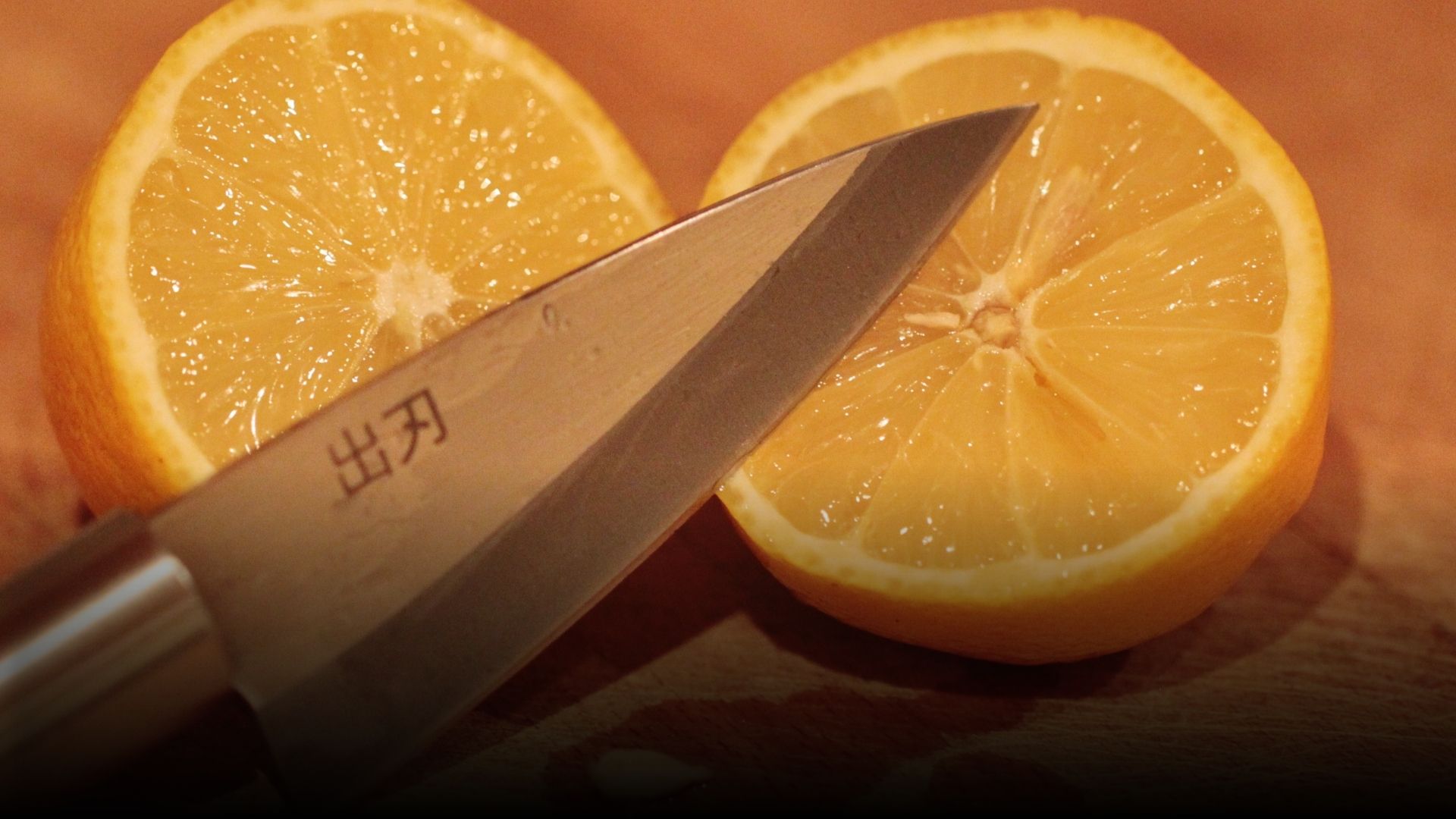
I still remember the first time I held a proper chef knife. It felt different. Balanced. Sharp. Alive in my hand. In a professional kitchen, a chef knife—le couteau du chef—is not just a tool. It is an extension of skill, speed, and precision. Every cut, every slice, every movement depends on how well you understand this one instrument.
If you step into any serious kitchen, you will notice something interesting. Around 70% of daily cutting tasks are done using a chef knife. That’s not a guess. It’s a reality observed across professional kitchens worldwide. From chopping herbs to breaking down vegetables, this knife handles it all.
But here’s the thing. Most people use a chef knife without truly understanding it. They don’t know its parts. They don’t know why it works so well. And they definitely don’t know how different types of chef knives can change their cooking experience completely.
So today, I want to walk you through it. Slowly. Clearly. Like a chef guiding you during your first day in the kitchen.
What is a Chef Knife? (Définition du Couteau du Chef)
A chef knife is a multi-purpose kitchen knife designed for slicing, chopping, dicing, and mincing. It usually ranges between 6 to 12 inches in length, with 8 inches being the most common size used in professional kitchens.
The origin of the chef knife traces back to Europe, especially France and Germany. The French style emphasizes a straighter edge, while the German style features a more curved blade for rocking motion. Both styles influenced modern designs used today.
This knife is often called the “workhorse” of the kitchen. Why? Because it handles nearly everything. Studies in culinary schools show that beginners improve cutting speed by nearly 40% when they master the chef knife properly.
The design is not random. Every curve, every angle, every part has a purpose. And once you understand that purpose, your cooking changes. You become faster. Cleaner. More confident.
Parts of a Chef Knife (Les Parties du Couteau)
Blade (La Lame)
The blade is the heart of the knife. It is the long, flat metal part that does the actual cutting. Most chef knife blades are made from stainless steel, high-carbon steel, or ceramic. Each material affects sharpness and durability.
A typical blade has a slight curve. This allows the rocking motion used in chopping herbs. The length gives leverage. The width provides stability. In fact, a wider blade helps in transferring chopped ingredients directly to the pan.
High-carbon steel blades are known to stay sharp longer. However, they require more care. Stainless steel, on the other hand, resists rust and is easier to maintain. Professional chefs often prefer a balance between the two.
The blade also includes a sharp edge called le tranchant. This edge must be maintained regularly. A dull blade increases effort and risk. Surprisingly, blunt knives cause more injuries than sharp ones because they slip more easily.
Tip (La Pointe)
The tip is the front end of the blade. It may look small, but it plays a crucial role. I use it for delicate tasks. Fine slicing. Trimming. Scoring vegetables or meat.
There are two main styles. A pointed tip, common in French knives, and a slightly curved tip found in German knives. The pointed tip offers precision. The curved one adds strength.
In professional kitchens, chefs often rely on the tip for detailed work. Around 20% of precision cuts depend on this small part. That’s a big number for such a tiny area.
If you ignore the tip, you miss out on control. And cooking is all about control.
Edge (Le Tranchant)
The edge is where the magic happens. This is the sharpened side of the blade that actually cuts through food. It can be straight or slightly curved depending on the knife style.
The sharpness of the edge is measured in degrees. Most chef knives have an angle between 15 to 20 degrees. A lower angle means sharper cuts but less durability.
Maintaining the edge is essential. Regular honing keeps it aligned, while sharpening restores it. In busy kitchens, chefs hone their knives daily. It takes seconds but makes a huge difference.
A sharp edge reduces cutting time by almost 30%. It also improves presentation. Clean cuts look better on the plate.
Spine (Le Dos)
The spine is the top, unsharpened edge of the blade. It provides strength and balance. A thicker spine means a heavier knife, which can help in cutting tough ingredients like squash.
Some chefs use the spine for crushing garlic. Others use it to apply pressure while cutting dense vegetables. It adds versatility.
The spine also affects comfort. A smooth, rounded spine feels better during long hours of use. In contrast, a sharp-edged spine can cause discomfort.
Balance begins here. Without a well-designed spine, the knife feels awkward.
Heel (Le Talon)
The heel is the back part of the blade, closest to the handle. It is the strongest part of the knife. I use it for heavy-duty tasks. Cutting thick vegetables. Breaking down meat.
The heel provides power. It handles pressure better than any other part. In fact, chefs rely on it for about 25% of heavy cutting tasks.
Its flat shape allows straight cuts. It also offers stability when slicing large items. Without a strong heel, the knife loses its versatility.
Tang (La Soie)
The tang is the portion of the blade that extends into the handle. It is hidden but important. A full tang runs through the entire handle, providing strength and balance.
Knives with full tangs are more durable. They also feel more stable. Partial tang knives are lighter but less sturdy.
In professional kitchens, full tang knives are preferred. They last longer. They handle pressure better. And they feel more reliable during long shifts.
Handle (Le Manche)
The handle is where you hold the knife. It must feel comfortable. Secure. Balanced. Common materials include wood, plastic, and composite materials.
A good handle reduces fatigue. It also improves control. Ergonomic designs are becoming popular because they fit naturally in the hand.
Studies show that a well-designed handle reduces hand strain by up to 35%. That matters when you are cutting for hours.
Grip matters too. A slippery handle is dangerous. Always choose one that offers a firm hold.
Bolster (La Mitre)
The bolster is the thick junction between the blade and the handle. It adds weight and balance. It also protects your fingers.
Not all knives have a bolster. Some modern designs remove it for easier sharpening. However, traditional chef knives include it for stability.
The bolster improves control. It helps in gripping the knife safely. It also enhances durability.
Types of Chef Knives (Types de Couteaux du Chef)
French Chef Knife (Couteau Français)
The French chef knife has a straighter edge. It is designed for slicing rather than rocking. This style originated in France and influenced modern knife design.
Chefs who prefer precise cuts often choose this type. It offers better control for fine slicing. The pointed tip adds accuracy.
German Chef Knife (Couteau Allemand)
The German style features a more curved blade. It supports the rocking motion used in chopping. This makes it ideal for beginners and heavy-duty tasks.
German knives are thicker and heavier. They are durable and versatile. Many professional kitchens rely on this design.
Japanese Chef Knife (Gyuto)
The Japanese Gyuto is a refined version of the chef knife. It is thinner and sharper. It allows precise cuts with minimal effort.
Japanese knives often use high-carbon steel. This gives exceptional sharpness but requires careful maintenance.
They are popular among chefs who value precision and elegance.
Santoku Knife (Santoku Bōchō)
The Santoku knife is another Japanese style. The name means “three virtues”—slicing, dicing, and mincing.
It has a shorter blade and a flat edge. This makes it easy to control. Many home cooks prefer it for everyday use.
Its popularity has grown globally. In fact, Santoku knives now account for nearly 30% of kitchen knife sales in some markets.
Ceramic Chef Knife
Ceramic knives are lightweight and extremely sharp. They do not rust. They also retain sharpness longer than steel knives.
However, they are fragile. They can chip or break easily. That makes them less suitable for heavy tasks.
They are best for slicing fruits and vegetables.
Conclusion
A chef knife is more than just steel and handle. It is a carefully designed tool built for efficiency, precision, and control. Every part—from the blade to the bolster—serves a purpose. Every type—from French to Japanese—offers a different experience.
When you understand your knife, you cook differently. You move with confidence. You cut with intention. You waste less time and effort.
So next time you pick up your chef knife, don’t just use it. Feel it. Understand it. Respect it.
Because in the kitchen, mastery begins with the knife.
FAQs
1. What are the main parts of a chef knife?
The main parts include the blade, edge, tip, spine, heel, tang, handle, and bolster. Each part plays a specific role in cutting and balance.
2. Which type of chef knife is best for beginners?
The German chef knife is ideal for beginners due to its curved blade and durability.
3. What is the difference between Santoku and chef knife?
A Santoku knife has a shorter, flatter blade, while a chef knife has a longer, curved blade for rocking motion.
4. How often should I sharpen a chef knife?
Sharpening depends on usage, but regular honing and sharpening every few weeks keeps the edge effective.
5. Why is a full tang knife better?
A full tang provides better balance, strength, and durability, making it more reliable for heavy use.
