
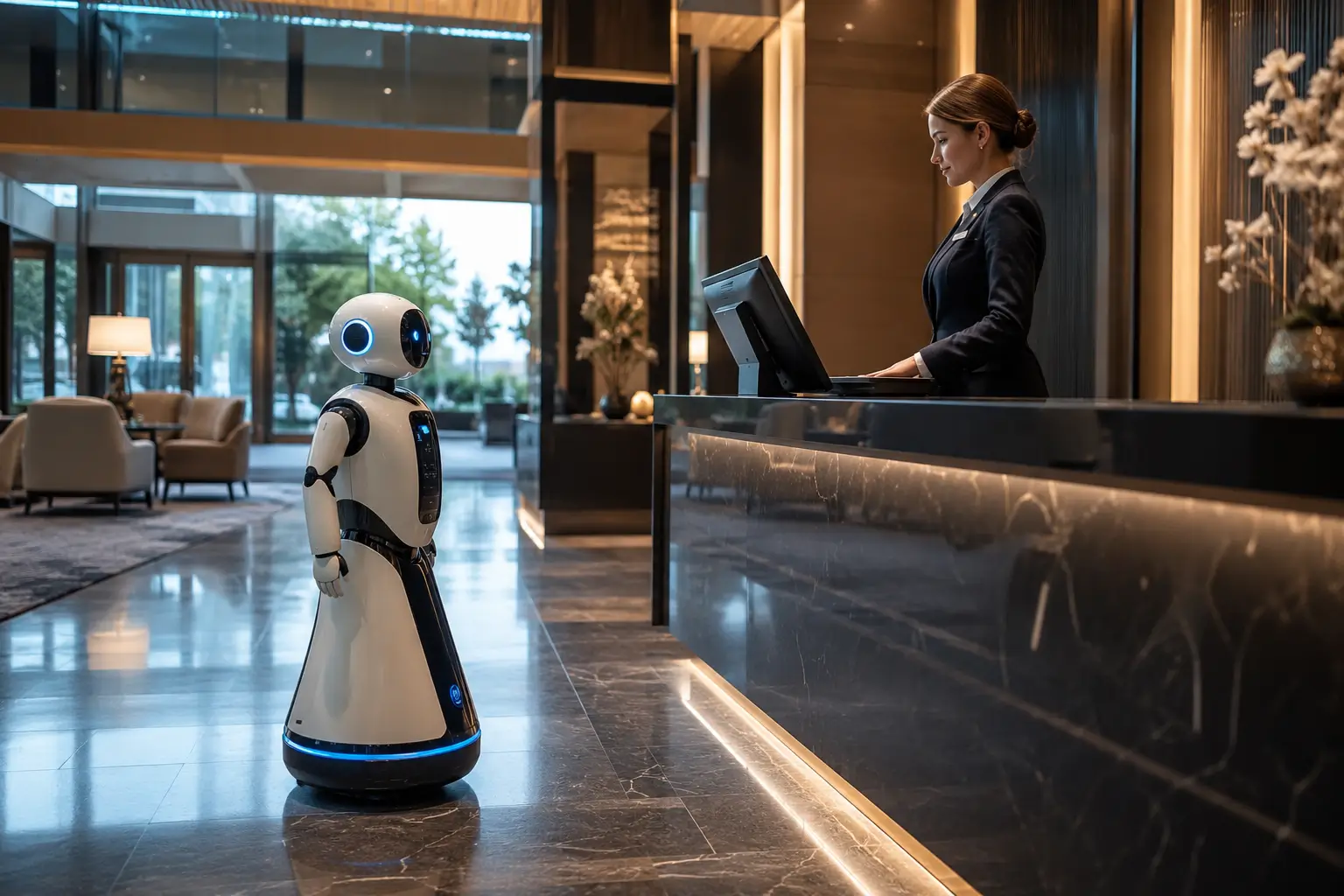
I remember walking into a hotel lobby ten years ago. A person behind a counter handed me a keycard. That was the whole experience. Today, that same lobby might have a robot rolling your luggage to the room, a digital concierge answering your questions, and a check-in kiosk that reads your face instead of your ID.
The hotel industry — what the French call l’industrie hôtelière — has undergone a transformation so dramatic in the last five years that even industry veterans are scrambling to keep up. And honestly, this is only the beginning.
According to a 2024 report by Hospitality Technology, 73% of hotel executives say technology investment is now their top priority — above hiring, renovation, and even marketing. That number tells you everything.
Hotels are no longer just selling rooms. They are selling experiences, convenience, and personalization. Technology is the engine powering all three. From artificial intelligence to the Internet of Things, from contactless systems to blockchain-backed loyalty programs, the tools reshaping hospitality are arriving fast and changing the rules permanently.
In this article, I am going to walk you through each major technology trend in detail. Where each came from. How it works. Why hotels are adopting it at speed. And what it means for the guest walking through the front door.
1. Artificial Intelligence and the Rise of the Intelligent Hotel
AI — intelligence artificielle in French — is not a concept anymore. It is a daily operational reality in thousands of hotels worldwide.
The origin of AI in hospitality can be traced back to the early 2010s when major hotel chains started using basic chatbots on their websites. These were clunky, frustrating, and barely functional. Fast forward to 2025 — the AI systems running inside luxury hotels today can predict guest preferences, automate revenue management, personalize upselling, and even detect maintenance problems before they happen.
Let me break down exactly how hotels are using AI today:
- Revenue management — AI systems analyze hundreds of variables in real time — competitor pricing, local events, booking patterns, weather forecasts — and adjust room rates automatically. This used to take a full-time analyst. Now it runs in the background 24/7.
- Guest communication — Hotels use AI-powered messaging platforms that handle thousands of guest queries simultaneously across WhatsApp, SMS, and email, without any human involvement.
- Predictive maintenance — Sensors connected to AI flag HVAC failures, plumbing issues, and elevator faults before they disrupt a guest’s stay. Marriott International reported a 25% reduction in maintenance costs after deploying predictive AI tools.
- Personalization engines — AI reads a returning guest’s previous stays, dining choices, temperature preferences, and special requests, then pre-configures the room before they arrive.
- Staff scheduling — AI tools analyze occupancy forecasts and historical demand data to build optimal shift schedules, reducing labour waste by up to 18% according to industry studies.
The depth of AI penetration in this industry is staggering. And we are still in the early innings.
2. Contactless Technology and the Death of the Key Card
Covid-19 did not create contactless technology in hotels — but it absolutely accelerated it by at least a decade.
The concept of sans contact — touchless interaction — became an operational necessity between 2020 and 2022. Hotels that had been dragging their feet on digital keys and mobile check-in suddenly had no choice. And once guests experienced the freedom of walking straight to their room without stopping at a front desk, they never wanted to go back.
Here is what the contactless hotel experience looks like today:
- Mobile check-in and check-out — Guests complete the entire arrival and departure process on their phones, often hours before they physically arrive. Hilton’s Digital Key technology now covers over 80% of its global portfolio.
- Smartphone room keys — Using Bluetooth Low Energy (BLE) or NFC technology, a guest’s phone becomes their room key. No plastic card. No remagnetization issues. No front desk queue.
- QR code menus and ordering — Restaurants and room service menus are now almost entirely digital. Guests scan, order, and pay from their phones.
- Touchless elevator controls — Some premium properties have introduced foot pedals, voice commands, and app-based elevator controls so guests never touch a button.
- Automated parking systems — License plate recognition cameras allow registered guests to enter and exit parking facilities without tickets or attendants.
- Biometric identity verification — Instead of passports at check-in, facial recognition systems verify guest identity in under three seconds at several airport hotels across Asia and Europe.
- Voice-controlled room features — Lights, blinds, TV, and thermostat are all controlled by voice command through in-room smart speakers integrated with the property management system.
- Contactless payment terminals — Tap-to-pay is now standard. Several boutique hotels in Europe have gone entirely cashless.
- Digital concierge kiosks — Touchscreen panels in lobbies, elevators, and corridors provide maps, restaurant bookings, and local information without any staff involvement.
- Automated minibar tracking — Smart sensors inside minibars detect when an item is removed and automatically bill the guest’s account — no more minibar audit headaches at checkout.
A 2024 Oracle Hospitality survey found that 73% of travellers prefer hotels offering self-service technology. That number is not slowing down.
3. The Internet of Things: Your Hotel Room Is Now Smarter Than Your Home
The Internet of Things — l’Internet des objets — refers to the network of physical devices embedded with sensors and software that communicate with each other and with central management systems.
In a smart hotel room, every object is connected. The thermostat knows when you are asleep and adjusts accordingly. The blinds open automatically at your preferred wake-up time. The shower runs to your saved temperature before you even step in. This is not science fiction — this is the Mandarin Oriental in Hong Kong and the Wynn Las Vegas, right now, today.
Here is how IoT is being deployed across hotel operations:
- Smart thermostats — Occupancy sensors detect when a room is empty and automatically reduce energy consumption. Hotels like IHG report 20-30% reductions in HVAC energy costs from smart climate control alone.
- Connected lighting systems — LED systems linked to occupancy sensors and room schedules reduce electricity waste dramatically. Lights never stay on in an empty room.
- Smart minibars — Weight sensors and RFID tags track consumption in real time and send automatic billing signals to the property management system.
- Asset tracking — RFID tags on housekeeping carts, linen trolleys, and maintenance equipment let managers see where every piece of equipment is at any moment.
- Water leak detection — Moisture sensors under sinks, behind toilets, and near boilers alert engineering teams to leaks before they become expensive disasters.
- Guest room hubs — Central IoT controllers inside each room allow guests to customise everything from lighting colour temperature to mattress firmness on adjustable smart beds.
- Connected kitchen equipment — In hotel restaurants, smart ovens and refrigerators monitor temperatures and send alerts if food safety parameters are breached.
- Pool and spa monitoring — Automated chemical dosing systems maintain water quality continuously, reducing manual testing labour and chemical waste.
- Energy management dashboards — Building management software aggregates data from hundreds of IoT sensors and gives facility managers a real-time view of the entire property’s energy profile.
- Smart locks and access control — IoT-enabled door locks integrate with the property management system, automatically granting or revoking access based on reservation status, no manual override required.
The global IoT in hospitality market was valued at $12.8 billion in 2023 and is projected to reach $31.4 billion by 2030. The numbers reflect how seriously the industry is investing in this infrastructure.
4. Big Data and Hyper-Personalisation
Data is le carburant — the fuel — of the modern hotel business. Every click, every booking, every room service order, every loyalty redemption generates a data point. And hotels that know how to read those data points are winning the personalisation game in ways that were unimaginable a decade ago.
Hyper-personalisation is about going beyond putting someone’s name on a welcome card. It means a hotel knowing that you always request a foam pillow, that you order a double espresso at 7am, that you prefer a high floor away from the elevator, and that you spend exactly $47 on average in the spa. And then acting on all of that before you even arrive.
Here is how big data is transforming the guest experience:
- Guest profiling systems — CRM platforms like Salesforce and Oracle OPERA collect and consolidate data from every guest touchpoint — reservation systems, loyalty programs, in-stay services, and post-stay surveys — into a single guest profile.
- Dynamic pricing models — Revenue management systems process thousands of data variables simultaneously to price rooms at the optimal rate for every single night.
- Sentiment analysis — AI tools scan review platforms, social media, and post-stay surveys in real time, flagging negative sentiment and alerting management immediately.
- Predictive upselling — Based on past behaviour, the booking engine automatically suggests room upgrades, dining packages, or spa treatments that a specific guest is most likely to purchase.
- Demand forecasting — Hotels use historical data, local event calendars, and macroeconomic indicators to forecast occupancy up to 365 days in advance, enabling smarter staffing and procurement.
The Ritz-Carlton has famously built its entire service culture around data — its guest history database contains notes on individual preferences gathered over decades of stays, and every property in the world can access them.
5. Robotics and Automation in Hotel Operations
The word robot comes from the Czech word robota, meaning forced labour or drudgery. Today, robots in hotels are not doing drudgery — they are doing the repetitive, time-consuming tasks that used to consume human labour so staff can focus on genuine hospitality.
Robot deployments in hotels have grown by over 300% since 2020, according to a report by McKinsey & Company. The use cases are expanding rapidly:
- Luggage delivery robots — Autonomous robots like Relay by Savioke deliver bags, towels, and amenities to guest rooms without any human involvement. The robot calls the lift, navigates corridors, and notifies the guest via SMS when it arrives.
- Cleaning robots — UV-C disinfection robots roll through corridors and common areas overnight, sanitising surfaces with ultraviolet light. Properties in Asia were early adopters after the pandemic.
- Reception robots — The Henn na Hotel in Japan became famous for staffing its front desk with humanoid robots. While fully robotic check-in remains niche, semi-automated kiosk robots are now mainstream.
- Room service delivery — Several Marriott and Hilton properties in the US have deployed autonomous delivery carts that bring food orders directly to guest room doors.
- Pool cleaning robots — Underwater robots vacuum pool floors and scrub walls automatically, reducing manual maintenance time by over 60%.
- Linen sorting machines — Automated laundry systems in large hotel operations sort, fold, and stack linens using robotic arms, processing thousands of items per hour.
- Inventory management robots — Warehousing robots in hotel back-of-house manage stock rooms, track minibar inventory, and generate automated purchase orders.
- Security robots — Autonomous patrol robots equipped with cameras and sensors monitor car parks, pool areas, and perimeter zones after hours, feeding footage to a central security system.
- Bar robots — Fully automated cocktail-making machines are appearing in rooftop bars and hotel lounges, serving precision-mixed drinks without a bartender.
- Kitchen robots — Automated cooking equipment handles repetitive prep tasks — chopping, portioning, frying — reducing kitchen labour costs while maintaining consistency.
6. Sustainability Technology: Green Hotels Are No Longer Optional
The French word durabilité — sustainability — has moved from a marketing checkbox to an operational imperative. Travellers are demanding it. Investors are requiring it. Governments are legislating it.
A 2024 Booking.com survey found that 76% of global travellers want to travel more sustainably, and hotels that cannot demonstrate genuine green credentials are losing bookings to competitors who can. Technology is now the primary vehicle for delivering real, measurable sustainability outcomes.
Here is how technology is helping hotels go green:
- Energy management systems (EMS) — Centralised software platforms monitor and control energy consumption across an entire property in real time, identifying waste and optimising usage automatically.
- Solar and renewable energy integration — Hotels are installing solar panels, battery storage systems, and smart grid connections that allow them to sell excess energy back to the grid.
- Water recycling systems — Greywater recycling technology treats wastewater from showers and sinks and reuses it for toilet flushing and irrigation.
- Food waste tracking technology — AI-powered food waste monitoring systems weigh and photograph kitchen waste, identifying patterns and helping chefs reduce over-preparation.
- Electric vehicle charging stations — Properties are installing EV charging bays as a guest amenity, powered increasingly by on-site solar generation.
- Carbon footprint dashboards — Hotels are now publishing real-time carbon data on their websites, letting guests see the environmental impact of their stay.
- Smart laundry systems — IoT-connected washing machines run only at full capacity and during off-peak energy hours, cutting both water and electricity consumption.
- Digital key elimination of plastic — Moving to smartphone-based room keys removes millions of plastic keycards from circulation each year across major hotel chains.
- Waste sorting technology — Sensor-equipped waste bins in hotel kitchens automatically sort recyclables, compostables, and general waste without manual separation.
- Green building certification technology — LEED and BREEAM certified hotels now use integrated building management software to maintain certification benchmarks continuously rather than during periodic audits.
Conclusion: The Hotel of Tomorrow Is Being Built Today
Every trend I have walked you through — AI, contactless systems, IoT, big data, robotics, and sustainability technology — is not a distant forecast. These are things happening in hotels right now, on every continent, across every price segment.
The hotels that are thriving are not the ones with the best locations or the most luxurious rooms. They are the ones that have made a serious, strategic commitment to technology as a core part of their business model.
Guests are smarter, more connected, and more demanding than ever. They expect seamless digital experiences before, during, and after their stay. They expect personalisation that feels thoughtful rather than algorithmic. They expect sustainability to be genuine rather than performative. And they expect all of it to work flawlessly, every single time.
The good news for the industry is that the technology to deliver all of this exists today. The investment required is real, but the returns — in occupancy, revenue per available room, guest loyalty, and operational efficiency — are measurable and significant.
The front desk of the future might be staffed by a robot. The room might configure itself before you arrive. The energy bill might be zero. And the guest experience might be the most personalised, frictionless, and memorable one in the history of hospitality.
That future is not coming. It is already checking in.
Frequently Asked Questions
1. What is the most important technology trend in the hotel industry right now? Artificial intelligence is currently the most impactful technology trend in hospitality. Hotels are using AI for revenue management, guest communication, predictive maintenance, and personalisation — all of which directly impact profitability and guest satisfaction.
2. How is contactless technology changing the hotel check-in experience? Contactless technology has eliminated the need for physical check-in desks in many properties. Guests can now check in via mobile app, access their rooms with smartphone keys, and check out without ever speaking to a staff member, making the process faster and more convenient.
3. What does IoT mean in the context of smart hotels? IoT in hotels refers to the network of connected devices — thermostats, lighting systems, locks, minibars, sensors — that communicate with each other and with central management software. This allows hotels to automate energy management, improve maintenance response, and personalise the in-room environment for each guest.
4. How are hotels using big data to improve guest experience? Hotels collect data from booking systems, loyalty programs, in-stay services, and post-stay feedback to build detailed guest profiles. These profiles power personalisation engines that pre-configure rooms, suggest relevant upgrades, and tailor communication to each individual guest’s preferences and history.
5. Are robots replacing hotel staff? Robots are not replacing hotel staff — they are handling repetitive, logistical tasks like luggage delivery, room service delivery, and cleaning so that human staff can focus on the high-touch, emotionally intelligent aspects of hospitality that technology cannot replicate. Most hotel operators see robotics as a complement to their workforce, not a replacement.